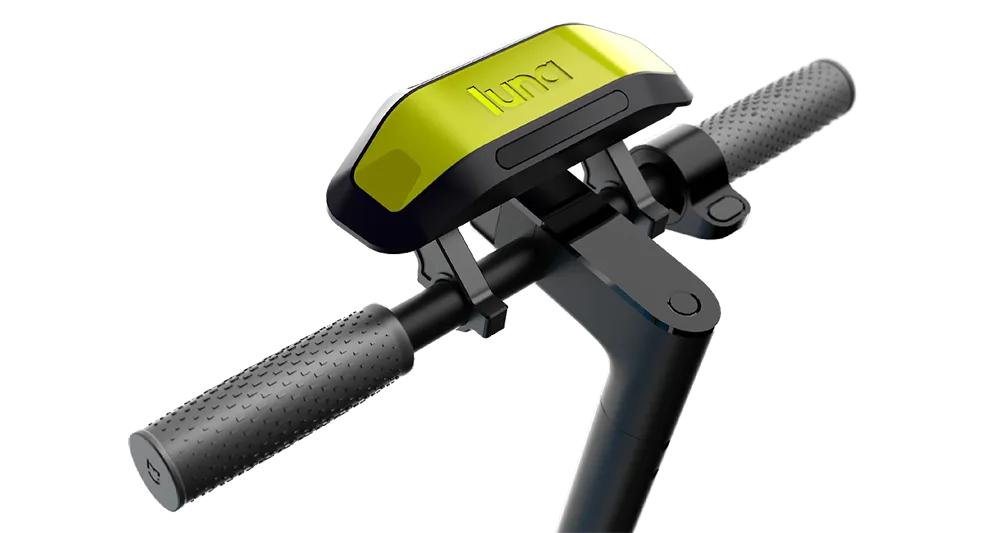
Luna unveils ‘cm-level’ positioning for e-scooters

Dublin-based start-up Luna has released a telematic device which it says uses 10cm-level positioning accuracy to help scooter companies ensure their scooters are ridden and parked correctly.
February 17, 2020 Read time: 1 min
Luna escooter

The device uses GNSS/GPS positioning with an integrated correction service to achieve this accuracy. It also uses machine vision and artificial intelligence (AI) to recognise parking spaces in GPS blackspots via 2D images (QR codes) located in and around the site, the company adds.

According to Luna, the device augments satellite-based positioning with machine vision and AI to overcome GPS blackspots while moving. The unit’s street Vs pavement algorithm allows the scooter camera to analyse the surface it is riding in real time.

Luna’s safety features include obstacle/footpath recognition to prevent pedestrian collisions as well as helmet detection to ensure scooters can only be operated once a rider is wearing their helmet.

Related Content

  • Vivacity to deploy traffic sensors in Australia 
    September 9, 2021
    Bicycle Network compares sensors to 1,000 people with clipboards and pens 
  • Lessons learned after year of Spin
    October 7, 2021
    Micromobility firm's discussion highlights some challenges of e-scooter deployment in UK
  • Caltrans trials Xerox’s Passenger Detection System
    October 30, 2015
    Xerox’s Passenger Detection System has been trialled in California and compared with the state’s team of human counters giving some interesting results, as Colin Sowman discovers. Like others adopting high-occupancy and high-occupancy vehicle (HOV) lanes for congestion management, Caltrans has faced challenges with compliance in what has been effectively an ‘honour system’ with drivers trusted to set their tags correctly or comply with the multi-passenger requirement.
  • Indra drones to manage road traffic in Spain
    October 14, 2019
    Indra is to use drones to monitor road traffic and detect incidents in Lugo, Spain. The company plans to employ the drones as sensors for current transportation monitoring systems and integrate them into its transportation control solution Mova Traffic. It will also develop tools to analyse video and images taken by drones in a bid to detect incidents automatically. Additionally, the company will incorporate its drones with a transportation control centre, which will process real-time image and video tra