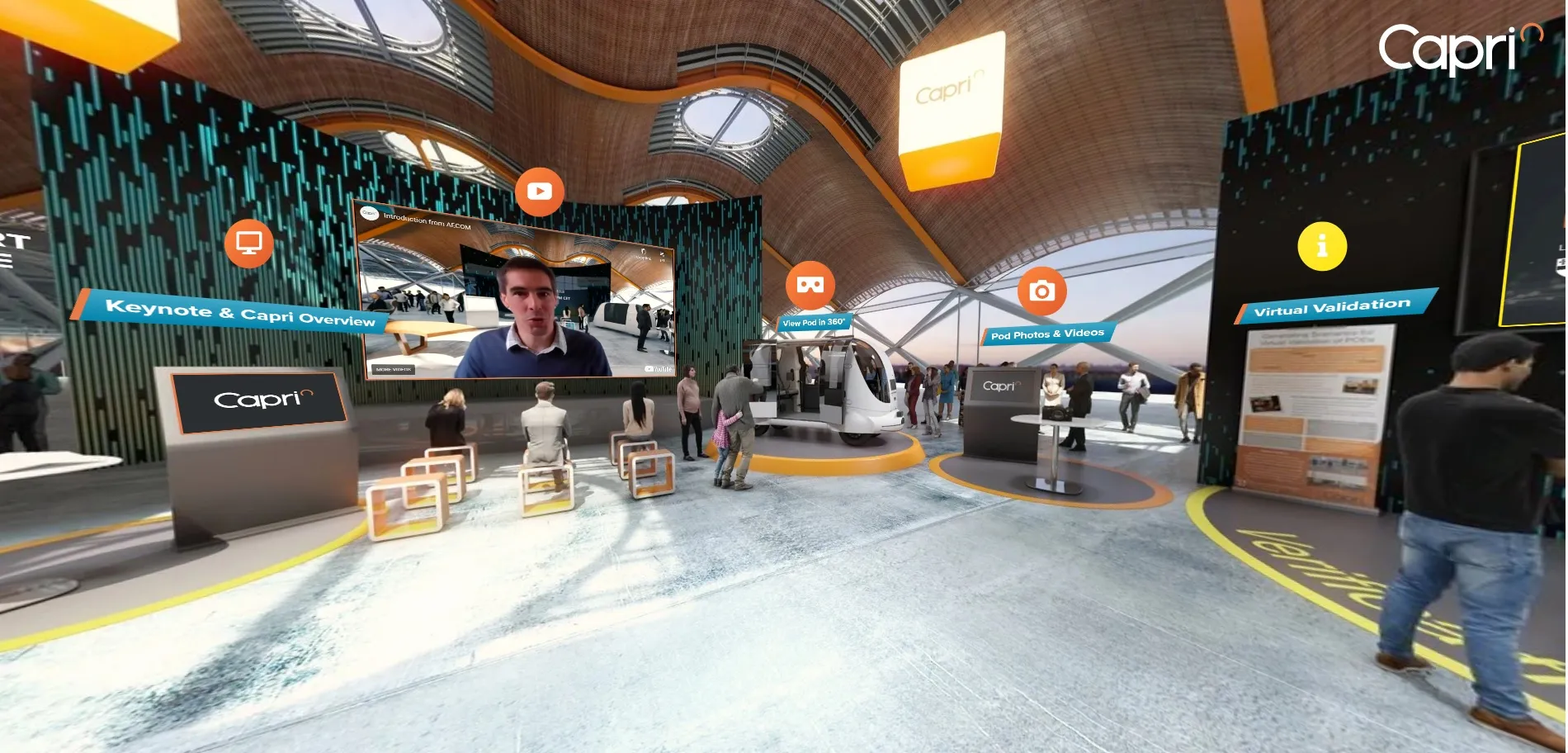
The UK's Capri consortium is showcasing project findings in a virtual museum which recommends further cross-sector collaboration to accelerate confidence in connected and autonomous vehicles (C/AVs).
The Aecom-led consortium concluded a three-year project aimed at building trust in autonomous vehicles with a blueprint designed to support the commercial use of these vehicles in shopping centres, business parks and hospitals.
The project involved autonomous vehicle trials with passengers in busy pedestrian areas and on private roads with a remote steward.
It also allowed partners such as Dynniq, Aimsun and Loughborough University to develop autonomous pods and gain an understanding of their viability and potential future uses.
George Lunt, technical director at Aecom, says: “Through our extensive research and autonomous vehicle trials, we have gained important lessons that will help pave the way for the future use of C/AVs as part of inclusive and integrated transport systems."
"Our research will aid investment decision-making around the technology, but it is vital that cross-sector collaboration and coordinated strategic investment.”
Aecom says the web-based museum is designed to share lessons learned from the project with the industry and wider public.
The exhibit includes unreleased trial footage, interviews and evidence-based findings from simulations and real-life testing.
It also features insights from advisory groups and user acceptance surveys as well as a 360-degree tour of an autonomous pod's interior and exterior.
“Key to its success is building passenger, regulatory and market confidence,” Lunt continues.
“Open to everyone, we hope our new virtual museum will help build trust and momentum for future autonomous vehicle services in the UK.”
Other members involved in the consortium include Heathrow, Axa, UWE Bristol (University of the West of England), YTL Developments and Burges Salmon.