
Tailored to vehicle imaging

JAI is launching two new high dynamic range CMOS cameras, the TS-4032EN (monochrome and TSC-4032EN (colour), tailored to demanding vehicle imaging and vehicle recognition applications in electronic toll collection, open road tolling, journey time information, speed enforcement, red light enforcement and homeland security.
July 26, 2012 Read time: 2 mins
78 JAI is launching two new high dynamic range CMOS cameras, the TS-4032EN (monochrome and TSC-4032EN (colour), tailored to demanding vehicle imaging and vehicle recognition applications in electronic toll collection, open road tolling, journey time information, speed enforcement, red light enforcement and homeland security.

The new cameras are based on a 43.3mm progressive-scan CMOS sensor providing over three megapixels of resolution (2,048x1,628 active pixels). This enables them to cover more than a full traffic lane with a vertical field of view of 3.7m.

The devices feature no-smear technology eliminating blooming and loss of license plate data due to problems with sun glare or glint. In addition, JAI says that the CMOS sensor's inherent high dynamic range of 66dB, combined with excellent near-IR sensitivity, and a signal-to-noise ratio of greater than 58dB, provides for high image quality in both daylight and night-time conditions.

When coupled with the company's external light sensor technology in a full system configuration, the cameras' dynamic range is significantly increased. The devices also feature internal JPEG compression, automatic FTP transmission of captured images to a file server, and internal clock synchronisation via the Network Time Protocol to ensure consistent date/time stamps in multi-camera installations. A built-in PowerPC processor running real-time Linux OS simplifies the process for in-field maintenance and firmware upgrades.

For more information on companies in this article

Related Content

  • Using electricity to power road freight
    October 22, 2014
    Next year sees the start of the first real-life electrified road system for transporting freight. Worldwide freight transportation is predicted to double by 2050 but despite expansion of global rail infrastructure only one third of this additional freight transport can be handled by trains. This means that the largest proportion of freight transport will continue to be by road and as a result, experts expect global CO2 emissions from road freight traffic to more than double by 2050.
  • DataCollect unveils two groundbreaking products at Intertraffic
    April 17, 2024
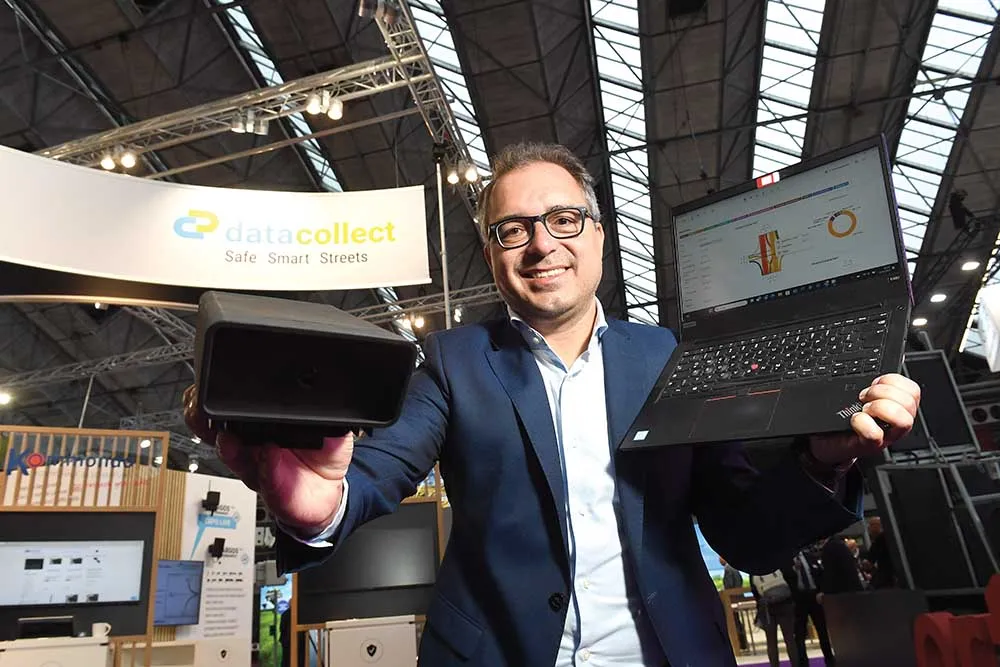
    Germany-headquartered DataCollect Traffic Systems has unveiled not one, but two groundbreaking products here at Intertraffic. The company says the new products are poised to redefine the landscape of traffic management and urban mobility. These innovations represent a convergence of cutting-edge technology and real-world application, promising to address critical challenges in transportation infrastructure.
  • Support for speed cameras remains high – but some drivers need convincing
    October 29, 2015
    A national survey by the Institute of Advanced Motorists (IAM) has shown that although most drivers support speed cameras there are big variations across the country – and Londoners and people in the north-east appear to show higher levels of resistance than most. The survey polled 1,000 drivers of all age groups across Britain and asked “It is now common for the authorities to use speed cameras at the side of the road to identify vehicles involved in speeding offences. How acceptable do you think this i
  • Zypad wearable computer
    January 24, 2012
    The Zypad WL1500 from Eurotech is a wearable computer that gives users access to immediate information without sacrificing mobility. The company says it is a perfect fit for users who need instant access to information while still maintaining mobility, such as in emergency search and rescue, medical, homeland security, law enforcement, logistics, maintenance and transportation. It is designed for instant access to computing capabilities while the wearer is carrying out tasks in the field, and features hands




