
In Image Triggering breakthrough

JAI has developed a new In Image Triggering (IIT) traffic camera system that is able to handle a wide range of advanced vehicle imaging and vehicle recognition (ANPR) applications in open road tolling, congestion charging, section speed control, parking access control, journey time and other traffic management applications.
February 3, 2012 Read time: 2 mins
When the car license plate passes the 'virtual trigger line' (the rectangular field), the projected IR light is reflected from the license plate back to the camera, which is then triggered to capture an image
78 JAI has developed a new In Image Triggering (IIT) traffic camera system that is able to handle a wide range of advanced vehicle imaging and vehicle recognition (ANPR) applications in open road tolling, congestion charging, section speed control, parking access control, journey time and other traffic management applications.

The key to the IIT system is its ability to detect and capture images of fast-moving vehicles without the need for ground loops, laser detectors or other lane controller hardware. It uses IR light reflected from passing vehicles to create a virtual 'trigger line' which tells the camera when to capture an image. JAI says that this patent-pending triggering technique provides very reliable image results.

The company's IIT Traffic Camera System is a robust all-in-one design which supports quick deployments and significantly reduced infrastructure costs in any ANPR application. The system includes, in one compact unit, a camera, plate illumination, light sensing, triggering and embedded ANPR/ALPR functions, with Ethernet or wireless interface. The system's built-in IR illuminator enables reliable imaging of vehicle plates, day or night, in virtually any weather or ambient light conditions, without the need for an external flash or other supplemental light sources. Also built into the IIT system is an advanced light sensing system which reads the light being reflected from the scene and instantaneously adjusts the camera settings for best image exposure.

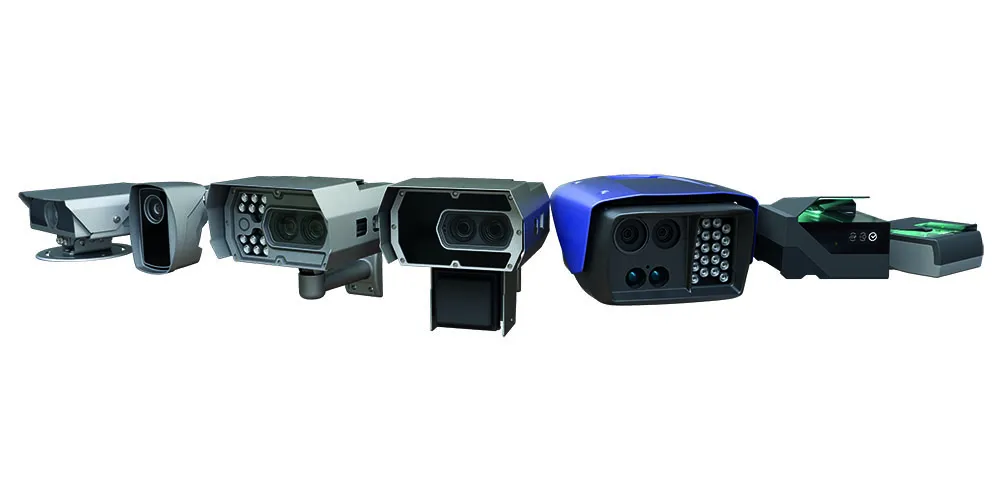
The system, which can be installed on existing gantries or on poles, can be configured with a range of JAI-designed cameras from the company's VISCAM family of products.
For more information on companies in this article

Related Content

  • Videalert launches ANPR camera for MEV range
    November 23, 2018
    Videalert says its new automatic number plate recognition (ANPR) camera delivers read rates over 98%. The HD camera, designed for the company’s range of mobile enforcement vehicles (MEV), is expected to boost productivity in parking and traffic management applications. According to Videalert, the two megapixel camera utilises Sony digital signal processor technology for noise reduction and infrared sensitivity to capture images of reflective number plates up to 40 metres away. The ANPR camera also features
  • See ANPR with Adaptive Recognition
    March 7, 2022
    Adaptive Recognition, formerly known as ARH, is best known as the innovator behind the globally recognised Carmen ANPR software. The company will be in Amsterdam to demonstrate its expertise and solutions. As Adaptive Recognition points out, because of its long-term partnerships with traffic monitoring solution providers worldwide, it closely follows the evolution of this market and gets direct feedback from system integrators working in the field.
  • Machine vision needs standards to fulfil ITS demands
    May 28, 2014
    No-one should expect the enabling qualities of machine vision to come free of charge but Jason Barnes finds there is still much that ITS stakeholders can do to help reduce costs. After many years of application in high-end solutions for the enforcement and tolling sectors, machine vision is gaining traction in more general areas of traffic management. Nevertheless, those OEMs producing transport-oriented solutions which incorporate machine vision and looking to increase the technology’s share of the ITS mar
  • Developments in software visualisation packages
    February 3, 2012
    Adrian Greeman looks at developments in software visualisation packages. The capacity to make visualisations has been growing in importance over the last decade, and is now a well-accepted part of consultations and client presentations. But making high-quality images of projects is still a major undertaking and larger consultancies employ specialist departments to do so. Costs are coming down but it can still take a while, and some high-capacity hardware, to produce realistic renderings from drawings and 3D




