
In Image Triggering breakthrough

JAI has developed a new In Image Triggering (IIT) traffic camera system that is able to handle a wide range of advanced vehicle imaging and vehicle recognition (ANPR) applications in open road tolling, congestion charging, section speed control, parking access control, journey time and other traffic management applications.
February 3, 2012 Read time: 2 mins
When the car license plate passes the 'virtual trigger line' (the rectangular field), the projected IR light is reflected from the license plate back to the camera, which is then triggered to capture an image
78 JAI has developed a new In Image Triggering (IIT) traffic camera system that is able to handle a wide range of advanced vehicle imaging and vehicle recognition (ANPR) applications in open road tolling, congestion charging, section speed control, parking access control, journey time and other traffic management applications.

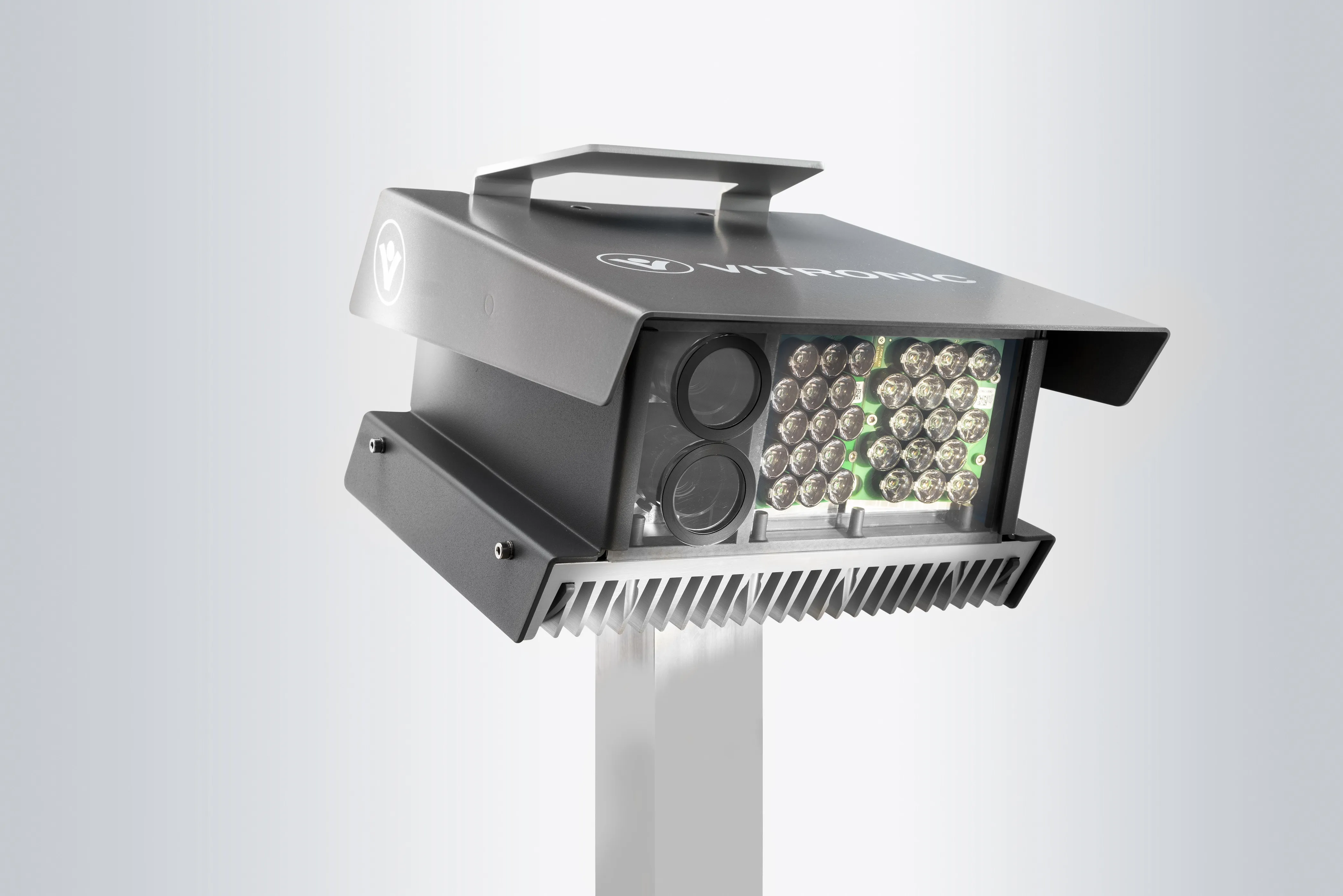
The key to the IIT system is its ability to detect and capture images of fast-moving vehicles without the need for ground loops, laser detectors or other lane controller hardware. It uses IR light reflected from passing vehicles to create a virtual 'trigger line' which tells the camera when to capture an image. JAI says that this patent-pending triggering technique provides very reliable image results.

The company's IIT Traffic Camera System is a robust all-in-one design which supports quick deployments and significantly reduced infrastructure costs in any ANPR application. The system includes, in one compact unit, a camera, plate illumination, light sensing, triggering and embedded ANPR/ALPR functions, with Ethernet or wireless interface. The system's built-in IR illuminator enables reliable imaging of vehicle plates, day or night, in virtually any weather or ambient light conditions, without the need for an external flash or other supplemental light sources. Also built into the IIT system is an advanced light sensing system which reads the light being reflected from the scene and instantaneously adjusts the camera settings for best image exposure.

The system, which can be installed on existing gantries or on poles, can be configured with a range of JAI-designed cameras from the company's VISCAM family of products.

For more information on companies in this article

Related Content

  • Debating road user charging systems
    January 26, 2012
    Are pre-launch trials of charging systems the way to improve public acceptance? Or is the real key a more robust political attitude? Here, leading system suppliers discuss the issue. The use of distance-based Road User Charging (RUC) is now well established, at least for heavy goods vehicles on strategic roads. However demand management for all vehicles, whether a distance-based charge or some form of cordon scheme, has yet to make significant progress. This is in spite of the logic and equity of RUC being
  • Vitronic’s new AI technology for toll control
    April 17, 2023
    Tollchecker allows detection, classification and identification to be image-based
  • Free-flow tolling needs classification technology rethink
    February 2, 2012
    The move to all-electronic fee collection should be encouraging tolling authorities to look again at whether their vehicle classification criteria and technologies remain at all appropriate. Bob Lees of Idris Technology writes
  • Coded exchanges
    July 24, 2012
    For many, Ethernet- and IP-based networks are the cast-iron solution to ITS's communications needs. However, there remain issues from manufacturer to manufacturer with interpretation of what are supposed to be common standards The 'promise' of Ethernet was that different devices such as IP video cameras and traffic signals could be easily integrated into communications networks, simplifying the process of transporting data over copper, fibre or wirelessly. However, although Ethernet devices have come to pre




