
In Image Triggering breakthrough

JAI has developed a new In Image Triggering (IIT) traffic camera system that is able to handle a wide range of advanced vehicle imaging and vehicle recognition (ANPR) applications in open road tolling, congestion charging, section speed control, parking access control, journey time and other traffic management applications.
February 3, 2012 Read time: 2 mins
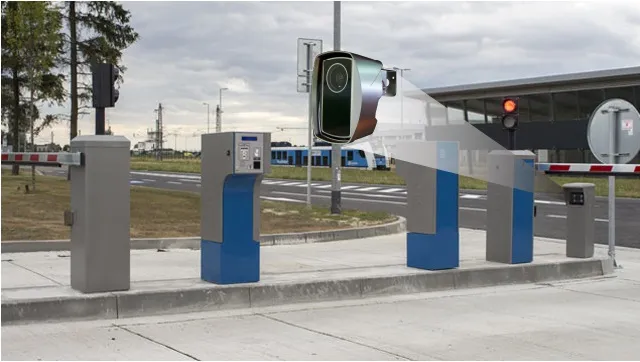
When the car license plate passes the 'virtual trigger line' (the rectangular field), the projected IR light is reflected from the license plate back to the camera, which is then triggered to capture an image
78 JAI has developed a new In Image Triggering (IIT) traffic camera system that is able to handle a wide range of advanced vehicle imaging and vehicle recognition (ANPR) applications in open road tolling, congestion charging, section speed control, parking access control, journey time and other traffic management applications.

The key to the IIT system is its ability to detect and capture images of fast-moving vehicles without the need for ground loops, laser detectors or other lane controller hardware. It uses IR light reflected from passing vehicles to create a virtual 'trigger line' which tells the camera when to capture an image. JAI says that this patent-pending triggering technique provides very reliable image results.

The company's IIT Traffic Camera System is a robust all-in-one design which supports quick deployments and significantly reduced infrastructure costs in any ANPR application. The system includes, in one compact unit, a camera, plate illumination, light sensing, triggering and embedded ANPR/ALPR functions, with Ethernet or wireless interface. The system's built-in IR illuminator enables reliable imaging of vehicle plates, day or night, in virtually any weather or ambient light conditions, without the need for an external flash or other supplemental light sources. Also built into the IIT system is an advanced light sensing system which reads the light being reflected from the scene and instantaneously adjusts the camera settings for best image exposure.

The system, which can be installed on existing gantries or on poles, can be configured with a range of JAI-designed cameras from the company's VISCAM family of products.
For more information on companies in this article

Related Content

  • ISS launches rapid plate recognition
    April 29, 2013
    Image Sensing Systems (ISS) has introduced what it claims is the fastest, most accurate automated licence plate recognition (ALPR) engine in the world with its CitySync rapid plate recognition technology. The system reads a licence plate numerous times and uses multiple advanced methods for both optical character recognition and plate finding for each plate read. The system looks for objects and then initiates multiple processing techniques that run concurrently on vehicles travelling at speeds up to 190 km
  • Adaptive carries out parking Czech
    July 12, 2021
    ParkIT smart access control cameras are used at Leoš Janáček International Airport
  • Moxa provides clear vision for Caldecott Tunnel’s Fourth Bore
    September 15, 2014
    Caldecott Tunnel’s new Fourth Bore is utilising a bespoke high-capacity monitoring and communications network from Moxa. The Caldecott Tunnel connects Contra Costa and Alameda counties in Northern California and traditionally it has suffered severe congestion - especially during peak hours. Opened in 1937 as a twin-bore arrangement, by 1964 the increase in traffic volumes led to a third bore being added. Shortly after the third bore was opened a tidal flow was introduced with the centre bore alternating in
  • Electronic toll collection delivers efficient traffic regulation
    February 3, 2012
    Electronic tolling systems have been in use for decades now. Worldwide, steadily more and more tolling systems are being set into operation, providing efficient means for traffic regulation and financing of infrastructure. But despite this maturity enforcement is still not being given the consideration it deserves. Q-Free's Steinar Furan writes




