
In Image Triggering breakthrough

JAI has developed a new In Image Triggering (IIT) traffic camera system that is able to handle a wide range of advanced vehicle imaging and vehicle recognition (ANPR) applications in open road tolling, congestion charging, section speed control, parking access control, journey time and other traffic management applications.
February 3, 2012 Read time: 2 mins
When the car license plate passes the 'virtual trigger line' (the rectangular field), the projected IR light is reflected from the license plate back to the camera, which is then triggered to capture an image
78 JAI has developed a new In Image Triggering (IIT) traffic camera system that is able to handle a wide range of advanced vehicle imaging and vehicle recognition (ANPR) applications in open road tolling, congestion charging, section speed control, parking access control, journey time and other traffic management applications.

The key to the IIT system is its ability to detect and capture images of fast-moving vehicles without the need for ground loops, laser detectors or other lane controller hardware. It uses IR light reflected from passing vehicles to create a virtual 'trigger line' which tells the camera when to capture an image. JAI says that this patent-pending triggering technique provides very reliable image results.

The company's IIT Traffic Camera System is a robust all-in-one design which supports quick deployments and significantly reduced infrastructure costs in any ANPR application. The system includes, in one compact unit, a camera, plate illumination, light sensing, triggering and embedded ANPR/ALPR functions, with Ethernet or wireless interface. The system's built-in IR illuminator enables reliable imaging of vehicle plates, day or night, in virtually any weather or ambient light conditions, without the need for an external flash or other supplemental light sources. Also built into the IIT system is an advanced light sensing system which reads the light being reflected from the scene and instantaneously adjusts the camera settings for best image exposure.

The system, which can be installed on existing gantries or on poles, can be configured with a range of JAI-designed cameras from the company's VISCAM family of products.

For more information on companies in this article

Related Content

  • I-80 Smart Corridor sets the ITS standard for California's Bay Area
    March 23, 2015
    Colin Sowman looks at California’s ‘smartest’ road which will open this spring to counter congestion and accidents on one of the Bay Area’s busiest interstates. Interstate 80 (I-80) is one of the busiest roads in the San Francisco Bay area with up to 270,000 vehicles using the corridor every day. The section between the Carquinez Bridge in Crockett and the Bay Bridge not only suffers congestion during the working week but also at weekends. Traditional remedies such as building additional lanes (there are al
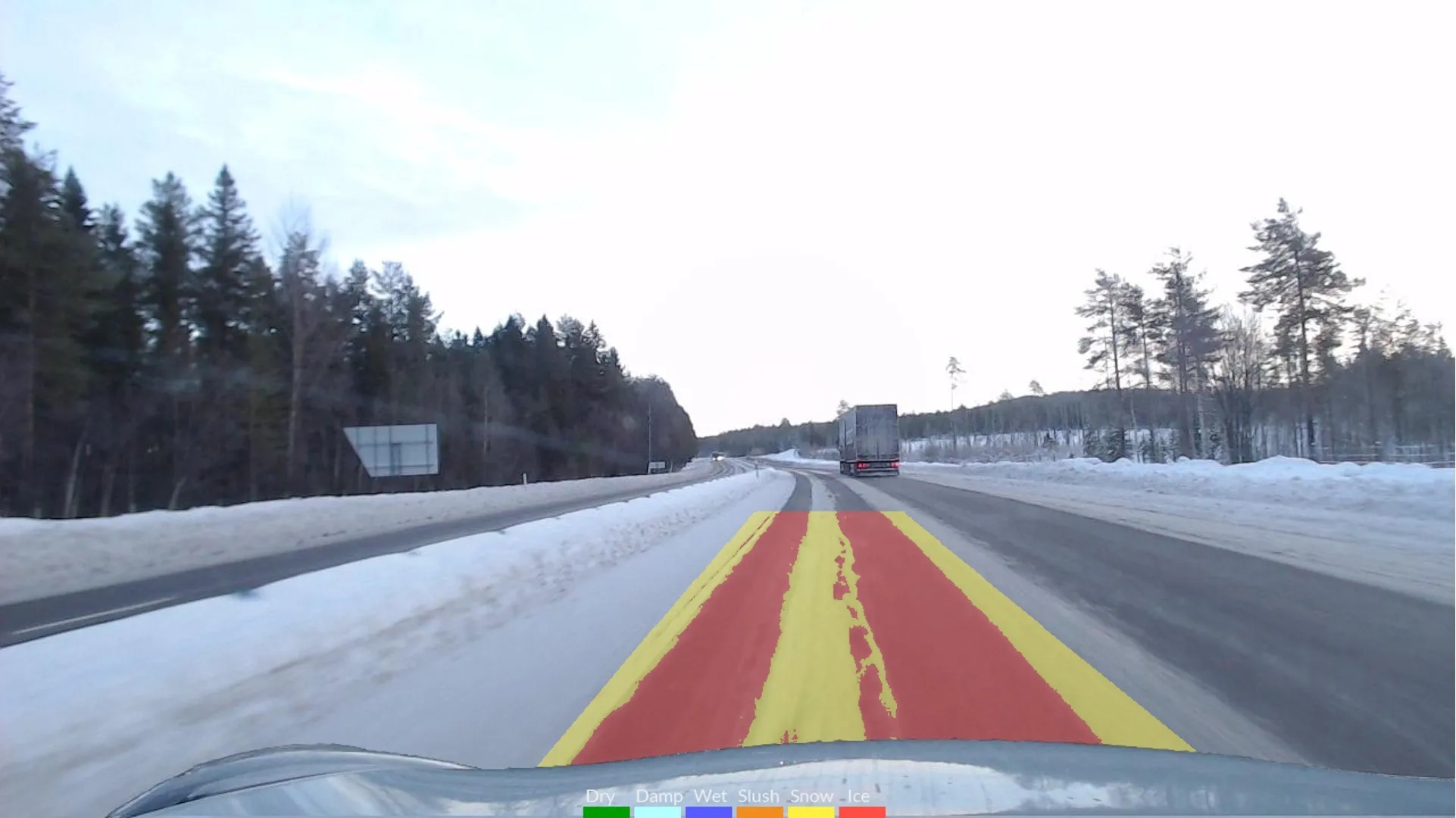
  • Klimator looks Ahead to winter weather
    September 15, 2022
    Swedish firm's software links with floating car data to accurately detect road conditions
  • Auckland reduces airport journey times
    April 16, 2018
    Getting from the centre of Auckland to the city’s airport used to be fraught with unwanted stress for passengers – but a new system combining radar, Bluetooth and Wi-Fi is smoothing things over. Andrew Stone investigates. Struggling to cope with steady growth in passenger numbers and the costly traffic congestion which that can entail, New Zealand’s Auckland International Airport has deployed an innovative system that is smoothing traffic and passenger flows. The same system is also offering new, data-led
  • Flir takeover of Traficon and the role of thermal imaging
    February 28, 2013
    Andy Teich, president of commercial systems at Flir, discusses the growing role of thermal technology in ITS and his company’s latest high-profile acquisition with Jason Barnes. Andy Teich, Flir’s president of commercial systems, doesn’t want to talk about infrared (IR). Instead, he’d prefer, he says, to discuss ‘thermal technology’. It is, he explains, to differentiate between the imaging technologies which his company specialises in and the LED illumination of IR cameras, an altogether different beast. Fl




