
Smart motorways 'not safer in every way' says UK gov

Smart motorways are not always as safe - or safer - than conventional motorways, the UK government has acknowledged.
By Adam Hill March 13, 2020 Read time: 2 mins
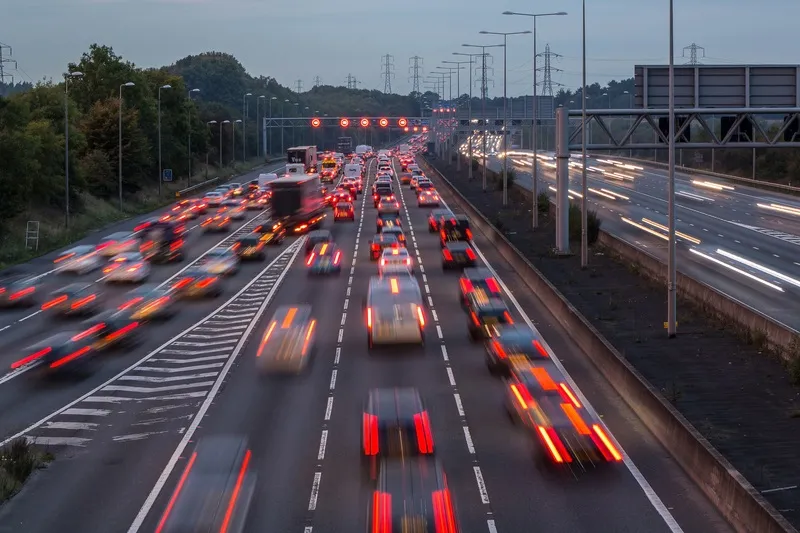
Dynamic hard shoulder running is to be abolished (© Gorgios Dreamstime.com)

Following a review it has published an 'action plan' to improve safety on smart motorways - which are typically four-lane highways with no hard shoulder.

Measures include reducing the distance between refuge areas to no more than one mile and cutting the time highway patrol officers take to get to stranded vehicles - from an average of 17 minutes down to 10 minutes.

The Department for Transport has also pledged to speed up the deployment of stopped vehicle detection technology across the entire 'all lane running' smart motorway network, so stopped vehicles can be detected and the lanes closed more quickly. 

A major move which had already been flagged up is "abolishing the confusing 'dynamic hard shoulder' smart motorways, where the hard shoulder operates only part-time and is a live running lane the rest of the time".

UK transport secretary Grant Shapps said: “Overall, what the evidence shows is that in most ways, smart motorways are as safe as, or safer than, the conventional ones. But not in every way.”

Shapps suggests that smart motorways have helped the network "cope with a 23% rise in traffic since 2000", reducing "the disruption and environmental destruction which would otherwise be needed to widen our busiest roads".

But road safety groups have expressed serious concerns about the concept, and Shapps acknowledges that it was "not always been well explained".

A BBC investigative programme revealed that 38 people had died on smart motorways in the last five years.

Jim O’Sullivan, Highways England chief executive, said: “Every death in any road accident is tragic, and we are determined to do all we can to make our roads as safe as possible."

He added that the agency would take note of the governments measures and would be "improving further our information to drivers to help them be safer on all of our roads, including our smart motorway network".

 

For more information on companies in this article

Related Content

  • Editor’s comment: 2021 is year of opportunity
    December 10, 2020
    We’ve all got used to an online world this year. For many of us, Zoom was just a cartoon synonym for ‘quick’ at the start of the year; now look...
  • RAC: over half of drivers believe congestion has worsened on UK major roads
    November 2, 2017
    56% of 1,727 drivers questioned in an annual survey believe that congestion has worsened on UK major roads, which carries 65% of all traffic, despite them comprising only 13% of the country’s road network. The findings from the survey have been presented by the RAC’s Report on Motoring.
  • Øresund bridges the front line for border crossing traffic
    September 15, 2016
    Timothy Compston considers the challenges faced by the operators of the Øresund Bridge between Denmark and Sweden, the largest structure of its kind across Europe. In light of the concerns about the ongoing security threat and the unprecedented flow of migrants, many of the countries that make up the Schengen Area in Europe have re-introduced border controls. For its part, Sweden has rolled out ID checks for train, bus and ferry passengers from Denmark placing the landmark Øresund Bridge very much on the fr
  • Average speed cameras go live on Scotland’s motorway upgrade
    July 17, 2015
    Average speed cameras are due to go live across the US$780 million M8 M73 M74 Motorway Improvements Project in Scotland. It is hoped they will encourage a safe and steady traffic flow by monitoring the average speed of vehicles through the works to ensure the safety of both road users and road workers. The cameras are expected to go live on 20 July and will remain in place until the completion of the project in spring 2017.




