
Seoul Robotics on track with Herzog

Companies link up to create automated obstacle detection system for railway/road safety
By Adam Hill April 5, 2022 Read time: 2 mins
SENSR-I enables the detection of more than 500 objects up to 200m ahead (© Val Armstrong | Dreamstime.com)

Seoul Robotics has integrated its 3D perception software with Herzog Technologies' occupancy detection suite to create an automated obstacle detection and warning system.

Herzog builds, operates, and maintains rail systems in North America and Critical Asset Monitoring (CAM) uses Seoul Robotics’ SENSR-I to track and classify objects such as humans, vehicles and bicycles.

The company says that SENSR-I enables the detection of more than 500 objects up to 200m ahead, predicts motion up to three seconds in advance, and provides real-time object perception.

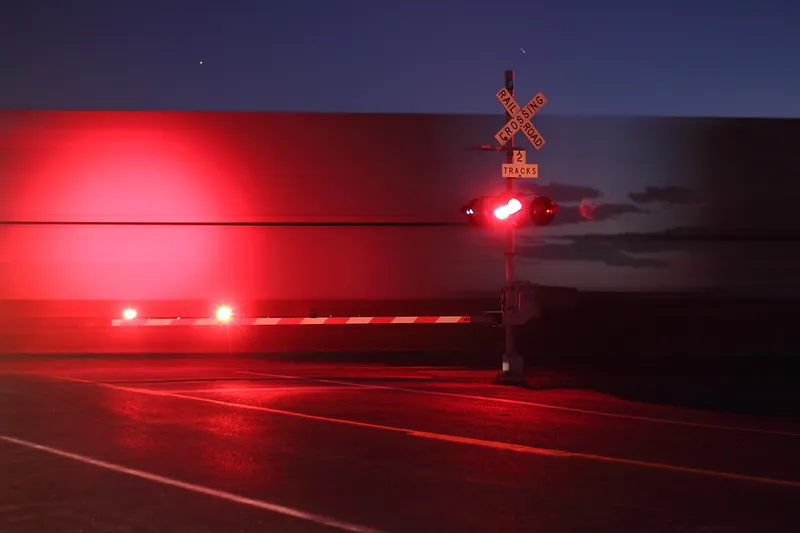
It can be used in areas - such as roads crossing railway tracks - that see trains in close proximity to other modes, including pedestrians.

Since 2011, over 23,000 incidents have occurred where trains have struck trains or people, resulting in 2,700 fatalities and 9,500 injuries, according to the U.S. Department of Transportation Federal Railroad Administration.

CAM's edge detection is combined with an ability to analyse information in real time and make timely decisions on notifying decision makers.

"CAM provides customers with the ability to monitor aspects of their critical infrastructure in ways previously unavailable," says Glen Dargy, VP of technology at Herzog.

“By integrating our products and services with Seoul Robotics’ software platform, we are providing an industry-leading solution.”

The solution is being implemented by Trinity Railway Express, a commuter rail operator between Fort Worth and Dallas, Texas.

"For a rail detection system, every second is critical," says Jerone Floor, VP of product at Seoul Robotics. 

"Trains need adequate time to fully stop and require advanced warning to reduce the chance of a collision."


 

For more information on companies in this article

Related Content

  • Connected vehicle data promises advanced weather warning
    August 29, 2012
    Connected vehicle research and development is being aimed at improving driver safety and mobility, but is also promising advanced weather monitoring and warning systems. Sheldon Drobot reports. Over the last few years, the United States’ Federal Highway Administration (FHWA) and Research & Innovative Technology Administration (RITA) have joined forces to promote safety, mobility and the environment through a new connected vehicle initiative. This aims to enable wireless communication between vehicles, infra
  • Cubic and partners develop gateless technologies to speed passenger management
    September 15, 2016
    Cubic Transportation Systems (CTS) is to collaborate with a diverse team of industry and academic partners to develop a prototype that integrates future ticketing technologies to support a doubled rate of passenger throughput at fare gates in train stations. According to travel projections, the number of journeys for passenger rail is likely to double over the next 30 years. Cubic’s submitted proposal, Fastback Gateless Gate line, to the Railway Standards and Safety Board’s (RSSB) Future Ticketing Detec
  • Predictive analytics aid Cologne’s congestion management
    January 17, 2013
    The City of Cologne, Germany, and IBM have completed a smarter traffic pilot to predict and manage traffic flow and road congestion in the city. The pilot demonstrates how the city of Cologne can anticipate, better manage, and in many cases, avoid traffic jams and trouble spots across the city using analytics technology. Germany’s fourth largest city, Cologne has a population of just over one million, is a retail centre, hub for trade shows and a cultural center with many museums and galleries. The increas
  • Unmanned to trial autonomous delivery bots in Seoul
    September 25, 2019
    Technology start-up Unmanned Solutions is to deploy autonomous delivery robots in Sangam Digital Media City (DMC), an autonomous driving test bed South Korea’s capital Seoul. The Korean Times says the four-wheeled electric vehicles will operate in the city for a year, carrying 200kg of goods on a flat tray. Jung Young-Jae, a city official in charge of the start-up incubation project at Seoul Institute of Technology, says: “The robots will start with shipping supplies from freight trucks near the mai



