'Phantom’ menace endangers AV passengers, says study 

Projecting a ‘phantom’ image on the road can cause a semi-autonomous vehicle to brake suddenly and endanger passengers, according to a new study. 
By Ben Spencer February 20, 2020 Read time: 2 mins
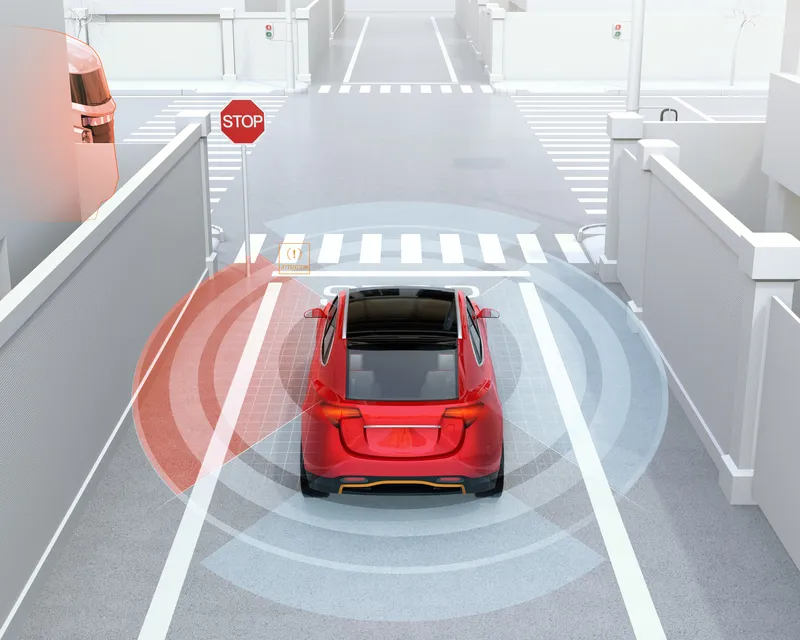
BGU demonstrates how a phantom image can put passengers in an AV in danger (Source: © Haiyin | Dreamstime.com)

Researchers at Israel’s Ben Gurion University (BGU) say this is because advanced driver assistance systems (ADAS) in semi- or fully-autonomous vehicles (AVs) consider these depthless projections as real objects. 

PhD student Ben Nassi says: “This is not a bug. This is not the result of poor code implementation. This is a fundamental flaw in object detectors that essentially use feature matching for detecting visual objects and were not trained to distinguish between real and fake objects. This type of attack is currently not taken into consideration by the automobile industry.”

The ‘Phantom of the ADAS’ project also showed that attackers can fool a driving assistance system into believing fake road signs are real by distinguishing phantoms for 125 milliseconds in advertisements presented on digital billboards near roads.

He says a shortage of vehicular communication systems which connect cars to each other and the surrounding infrastructure is creating a “validation gap”, which prevents AVs from validating their virtual perception with a third party. 

More alarmingly, Nassi warns that remote attacks do not need to be carried out by skilled hackers who exploit the validation gap as the project demonstrated how such an attack can be carried out by projecting a phantom road sign from a drone. 

BGU researchers are now developing a convolutional neural network model that analyses a detected object’s contextual, surface and reflected light, which is capable of detecting phantoms with high accuracy.


For more information on companies in this article

Related Content

  • Caltrans takes the long view of transport
    October 21, 2016
    Caltrans’ Malcolm Dougherty took time out of his schedule at ITS America 2016 in San Jose to talk to ITS International about current and future challenges. As director of California Department of Transportation (Caltrans) since mid-2012, many would say that Malcolm Dougherty has one of the best jobs in transportation. Caltrans is one of the most progressive and innovative transport authorities, implementing policies to encourage cycling, piloting new
  • Euro NCAP puts autonomous pedestrian detection to the test
    November 11, 2015
    European safety organisation Euro NCAP is introducing a new test that will check how well vehicles autonomously detect and prevent collisions with pedestrians, which it says will make it simpler for consumers and manufacturers to find out which systems work best. According to Euro NCAP, independent analysis of real world crash data in the UK and Germany indicates that the deployment of effective autonomous emergency braking systems on passenger cars could prevent one in five fatal pedestrian collisions.
  • Aimsun makes Paris match
    March 11, 2021
    How do digital twins allow city planners to test out new road layouts virtually?
  • Ukraine’s ITS in a time of war
    May 12, 2023
    Following invasion by Russia, work on ITS projects has stopped in Ukraine – but the state road agency and private contractors have pivoted to providing essential services instead