
'Phantom’ menace endangers AV passengers, says study 

Projecting a ‘phantom’ image on the road can cause a semi-autonomous vehicle to brake suddenly and endanger passengers, according to a new study. 
By Ben Spencer February 20, 2020 Read time: 2 mins
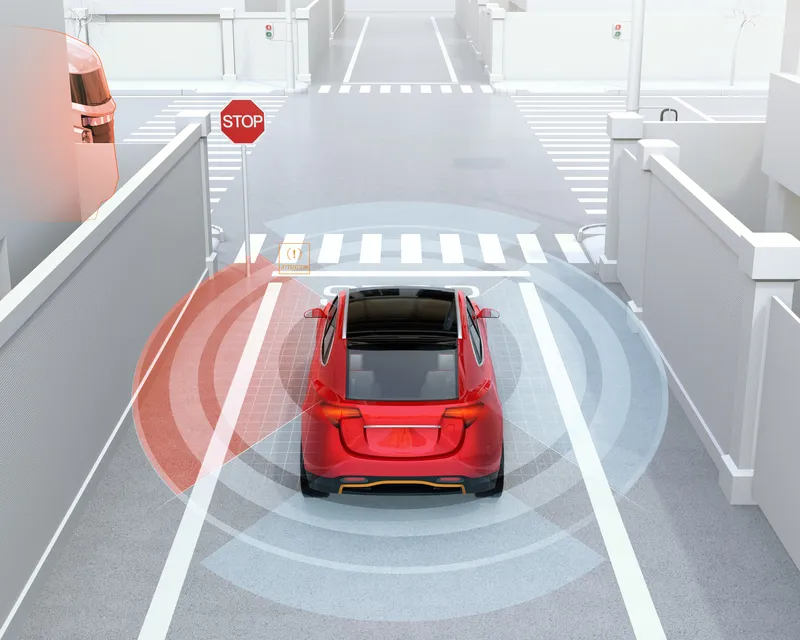
BGU demonstrates how a phantom image can put passengers in an AV in danger (Source: © Haiyin | Dreamstime.com)

Researchers at Israel’s Ben Gurion University (BGU) say this is because advanced driver assistance systems (ADAS) in semi- or fully-autonomous vehicles (AVs) consider these depthless projections as real objects. 

PhD student Ben Nassi says: “This is not a bug. This is not the result of poor code implementation. This is a fundamental flaw in object detectors that essentially use feature matching for detecting visual objects and were not trained to distinguish between real and fake objects. This type of attack is currently not taken into consideration by the automobile industry.”

The ‘Phantom of the ADAS’ project also showed that attackers can fool a driving assistance system into believing fake road signs are real by distinguishing phantoms for 125 milliseconds in advertisements presented on digital billboards near roads.

He says a shortage of vehicular communication systems which connect cars to each other and the surrounding infrastructure is creating a “validation gap”, which prevents AVs from validating their virtual perception with a third party. 

More alarmingly, Nassi warns that remote attacks do not need to be carried out by skilled hackers who exploit the validation gap as the project demonstrated how such an attack can be carried out by projecting a phantom road sign from a drone. 

BGU researchers are now developing a convolutional neural network model that analyses a detected object’s contextual, surface and reflected light, which is capable of detecting phantoms with high accuracy.


For more information on companies in this article

Related Content

  • Improved productivity and advanced technology benefits ITS
    December 13, 2012
    John Horsley will hang up his hat as executive director of AASHTO in February 2013. After 14 years at the helm, he will bow out convinced of the current and future benefits of ITS for US transportation. Alot of exciting career opportunities still await young engineers in US transportation, says John Horsley, outgoing executive director of AASHTO – the American Association of State Highway & Transportation Officials. Horsley will be dedicating more of his time to matters of ITS after he stands down in Februa
  • Asecap Days 2025: 'Vision Zero is not a number, it’s about a culture'
    May 29, 2025
    Saving lives and saving road infrastructure were two of the topics at the second and last day of the annual conference of Asecap, the European road tolling association, in Spanish capital Madrid
  • Milwaukee’s bus service offers jobs lifeline
    November 23, 2018
    A bus-to-jobs project in Milwaukee provides a useful service for low-paid workers. A new report shows the economic impact of potential closure on local employers - and demonstrates the importance of public transit networks for disadvantaged communities The city of Milwaukee, Wisconsin, has a problem. Getting people into out-of-town districts for work is an engine of economic growth, but it costs money. The Milwaukee County Transit System (MCTS) bus routes 6 and 61 - also known as JobLines - provide acces
  • Connected vehicle trials get big backing from USDOT
    March 14, 2016
    Connected vehicle technology will emerge as a sustainable reality at three sites in the US over the next four years. Jon Masters reports. Advocates of connected vehicle (CV) technology have received a welcome boost from news that the US government has committed a further $4 billion towards automated vehicle research and CV technology. This comes hot on the heels of the US Department of Transportation’s $42 million CV pilot pledge in October last year.




