'Phantom’ menace endangers AV passengers, says study 

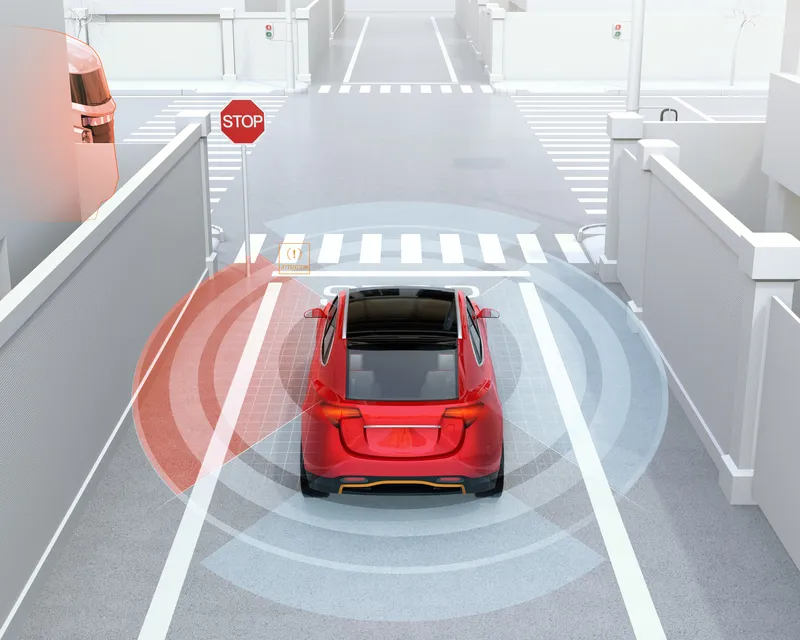
Projecting a ‘phantom’ image on the road can cause a semi-autonomous vehicle to brake suddenly and endanger passengers, according to a new study. 
By Ben Spencer February 20, 2020 Read time: 2 mins
BGU demonstrates how a phantom image can put passengers in an AV in danger (Source: © Haiyin | Dreamstime.com)

Researchers at Israel’s Ben Gurion University (BGU) say this is because advanced driver assistance systems (ADAS) in semi- or fully-autonomous vehicles (AVs) consider these depthless projections as real objects. 

PhD student Ben Nassi says: “This is not a bug. This is not the result of poor code implementation. This is a fundamental flaw in object detectors that essentially use feature matching for detecting visual objects and were not trained to distinguish between real and fake objects. This type of attack is currently not taken into consideration by the automobile industry.”

The ‘Phantom of the ADAS’ project also showed that attackers can fool a driving assistance system into believing fake road signs are real by distinguishing phantoms for 125 milliseconds in advertisements presented on digital billboards near roads.

He says a shortage of vehicular communication systems which connect cars to each other and the surrounding infrastructure is creating a “validation gap”, which prevents AVs from validating their virtual perception with a third party. 

More alarmingly, Nassi warns that remote attacks do not need to be carried out by skilled hackers who exploit the validation gap as the project demonstrated how such an attack can be carried out by projecting a phantom road sign from a drone. 

BGU researchers are now developing a convolutional neural network model that analyses a detected object’s contextual, surface and reflected light, which is capable of detecting phantoms with high accuracy.

For more information on companies in this article

Related Content

  • Harman integrates Google Glass with ADAS
    January 8, 2014
    Audio and infotainment group Harman is to demonstrate its integration of Google Glass with its advanced driver assistance system (ADAS) engine at the One Harman experience showcase at during the Consumer Electronics Show (CES) in Las Vegas 7-10 January. Demonstrations will show Google Glass can be seamlessly integrated with the company’s ADAS engine, using an android camera feed and image processing to analyse in real-time camera the potential road risks provide alerts through the Google Glass. The syst
  • Arup’s vision of urban mobility in 2050
    May 6, 2015
    Arup’s vision of the Future of Highways considers a wide range of factors that will impact on mobility towards the middle of the century. In its consideration of the Future of Highways through to 2050, international consultants Arup has taken a broad and pragmatic view of where society is heading and the effects that will have on the transport requirements. In terms of major drivers it not only cites
  • Ouster is where the magic happens
    March 31, 2022
    Lidar technology is growing in importance in traffic management. It offers reliable and precise object detection in any light or weather, with an accurate 3D image of the environment (unlike cameras), in high resolution (unlike radar), all while maintaining personal privacy.
  • Brigade detects potential collisions
    November 24, 2021
    Algorithm designed to calculate risk of a vehicle hitting cyclists and pedestrians nearby