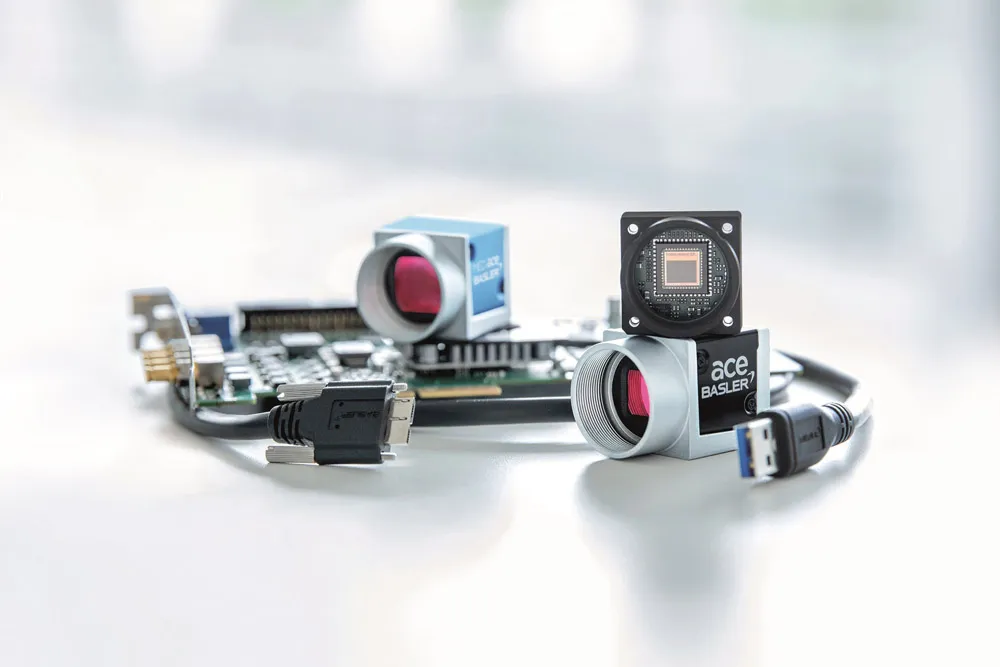
The USB3 Vision specification, the result of many months of collaboration between some of the machine vision industry's leading technology companies, has been successfully ratified by the Automated Imaging Association (AIA) and members of the USB3 Vision Technical Committee. The aim of the standard is to enable interoperability between USB 3.0 imaging components such as cameras, accessories and software. Like the popular GigE Vision standard, USB3 Vision will provide a framework for transmitting high-speed

The USB3 Vision specification, the result of many months of collaboration between some of the machine vision industry's leading technology companies, has been successfully ratified by the 6856 Automated Imaging Association (AIA) and members of the USB3 Vision Technical Committee.
The aim of the standard is to enable interoperability between USB 3.0 imaging components such as cameras, accessories and software. Like the popular GigE Vision standard, USB3 Vision will provide a framework for transmitting high-speed video and related control data.
541 Point Grey, an innovator of USB 3.0 technology and one of the original three founding members of the USB3 Vision committee, congratulated the AIA, "We are proud to have been part of this effort and congratulate the AIA and our fellow committee members on their hard work and dedication," says Michael Gibbons, director of sales and marketing.
Gibbons adds, "Point Grey plans to support USB3 Vision in the future on our existing Flea3 and upcoming Grasshopper3 camera models via a simple firmware update. Our goal is to enable interoperability with other USB3 Vision-compliant devices and software, while also maintaining backward compatibility for our existing customer base."
Version 1.0 of the USB3 Vision specification is available for download to the public for free on the AIA website: www.visiononline.org.
Founded in 1984 to advance the understanding and use of imaging and vision technologies and to drive global expansion and growth through education and promotion, AIA now represents over 320 vision suppliers, system integrators, users, researchers, and consulting firms from 32 countries.
The aim of the standard is to enable interoperability between USB 3.0 imaging components such as cameras, accessories and software. Like the popular GigE Vision standard, USB3 Vision will provide a framework for transmitting high-speed video and related control data.
Gibbons adds, "Point Grey plans to support USB3 Vision in the future on our existing Flea3 and upcoming Grasshopper3 camera models via a simple firmware update. Our goal is to enable interoperability with other USB3 Vision-compliant devices and software, while also maintaining backward compatibility for our existing customer base."
Version 1.0 of the USB3 Vision specification is available for download to the public for free on the AIA website: www.visiononline.org.
Founded in 1984 to advance the understanding and use of imaging and vision technologies and to drive global expansion and growth through education and promotion, AIA now represents over 320 vision suppliers, system integrators, users, researchers, and consulting firms from 32 countries.