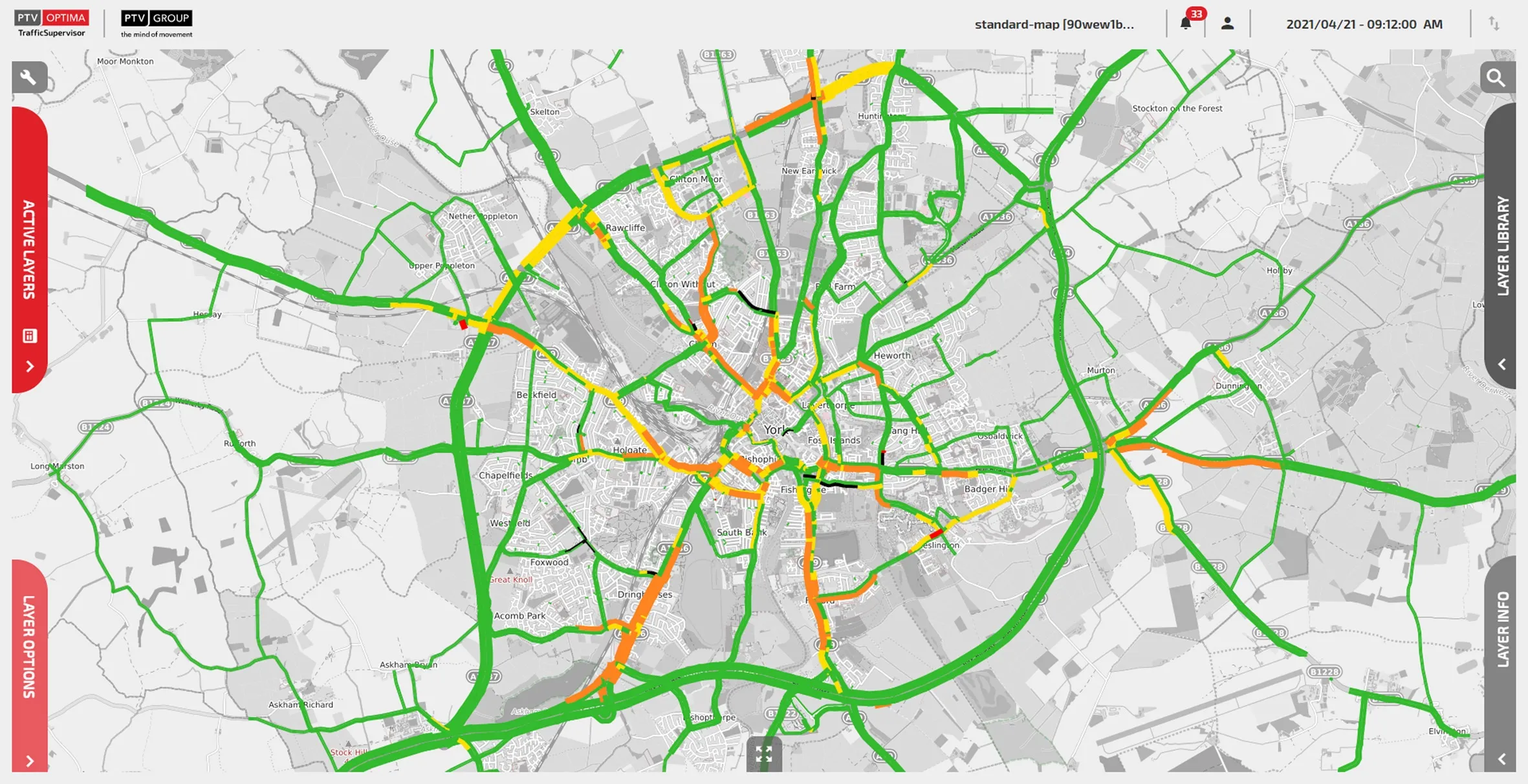
Microsoft Research is working with Federal University of Minas Gerais in Brazil to tackle the problem of traffic jams. The immediate objective of this research is to predict traffic conditions over the next 15 minutes to an hour, so that drivers can be forewarned of likely traffic snarls.
The Traffic Prediction Project plans to combine all available traffic data, including both historic and current information gleaned from transportation departments, Bing traffic maps, road cameras and sensors and the so

Microsoft Research is working with Federal University of Minas Gerais in Brazil to tackle the problem of traffic jams. The immediate objective of this research is to predict traffic conditions over the next 15 minutes to an hour, so that drivers can be forewarned of likely traffic snarls.
The Traffic Prediction Project plans to combine all available traffic data, including both historic and current information gleaned from transportation departments, Bing traffic maps, road cameras and sensors and the social networks of the drivers themselves, to create a solution that gets motorists from point A to point B with minimal stop-and-go. The use of historic data and information from social networks are both unique aspects of the project.
By using algorithms to process all these data, the project team intends to predict traffic jams accurately so that drivers can make smart, real-time choices, like taking an alternative route, using public transit, or maybe even just postponing a trip. The predictions should also be invaluable to traffic planners, especially when they are working to accommodate traffic from special events and when planning for future transportation needs.
To date, the researchers have tested their prediction model in some of the world’s most traffic-challenged cities: New York, Los Angeles, London and Chicago. The model achieved a prediction accuracy of 80 percent, and that was based on using only traffic-flow data. The researchers expect the accuracy to increase to 90 per cent when traffic incidents and data from social networks are folded in.
The Traffic Prediction Project plans to combine all available traffic data, including both historic and current information gleaned from transportation departments, Bing traffic maps, road cameras and sensors and the social networks of the drivers themselves, to create a solution that gets motorists from point A to point B with minimal stop-and-go. The use of historic data and information from social networks are both unique aspects of the project.
By using algorithms to process all these data, the project team intends to predict traffic jams accurately so that drivers can make smart, real-time choices, like taking an alternative route, using public transit, or maybe even just postponing a trip. The predictions should also be invaluable to traffic planners, especially when they are working to accommodate traffic from special events and when planning for future transportation needs.
To date, the researchers have tested their prediction model in some of the world’s most traffic-challenged cities: New York, Los Angeles, London and Chicago. The model achieved a prediction accuracy of 80 percent, and that was based on using only traffic-flow data. The researchers expect the accuracy to increase to 90 per cent when traffic incidents and data from social networks are folded in.