Cross Zlin’s optical sensors increase options for WIM

Having won the 2016 Intertraffic Innovation Award, Cross Zlin is back again with a host of new products including a shortlisted fibre-optic based weigh-in-motion system called OptiWim. Marketing manager Libor Sušil describes the system as weigh-in-free-flow as it measures the axle across the full lane width regardless of the position of the wheels and the sensor can also detect underinflated tyres even on twin wheel configurations. He likens the measuring method to that of a strain gauge but adds that
March 21, 2018 Read time: 2 mins
Made to measure: Libor Sušil of Cross Zlin

Having won the 2016 70 Intertraffic Innovation Award, 8689 Cross Zlin is back again with a host of new products including a shortlisted fibre-optic based weigh-in-motion system called OptiWim.

Marketing manager Libor Sušil describes the system as weigh-in-free-flow as it measures the axle across the full lane width regardless of the position of the wheels and the sensor can also detect underinflated tyres even on twin wheel configurations.

He likens the measuring method to that of a strain gauge but adds that the fibre-optic system provides more information, has direct temperature compensation, is unaffected by radio frequencies and achieves an accuracy of ±3%.

There are no electrical cables running to the sensor which comes in several lengths, has an expected life of 10 years and fits into a U-Bed installed in the road surface. When required, the sensor can be removed and changed without disturbing the road surface by undoing the side holder bars.

The company is in the process of having the system type approved but is confident that OptiWim’s A3 precision means it can be used for automatically penalising overloaded vehicles and will offer a speed range from 10km/h up to a theoretical 250km/h. It says automatic ticketing has seen a substantial improvement in enforcement and penalisation of violators and that removing overloaded vehicles dramatically increases a road’s lifespan.

Although the cost of individual fibre-optic sensors is higher that their traditional counterparts, Sušil says because each WIM location needs only a single sensor (in each direction), the overall cost is equivalent to using other technologies.

For more information on companies in this article

Related Content

  • New Hampshire plans for tomorrow’s communication
    August 21, 2017
    Someone once likened predicting the future to ‘nailing a jelly to the wall’. With ITS, C-ITS and V2X technology progressing at such a pace, predicting the future is more akin to trying to nail three jellies to the wall – but only having one nail. And yet with roadways having a lifetime measured in decades, that is exactly what highway engineers and traffic planners are expected to do. Fortunately, New Hampshire DoT (NHDoT) believes its technological advances may be able to provide a solution. The Central Ne
  • Bringing enforcement standards into line
    March 1, 2013
    Difficulties with the apparent accuracy of enforcement systems have been making the headlines in the United States over recent months. Jon Masters investigates the causes and possible cures. Online newspaper reports in the United States over recent months have painted a picture of the authorities struggling to keep on top of their speed and red light enforcement pro­grammes. Among a host of stories put out by the Washington Post and others on the subject of speed cameras during January, there were reports
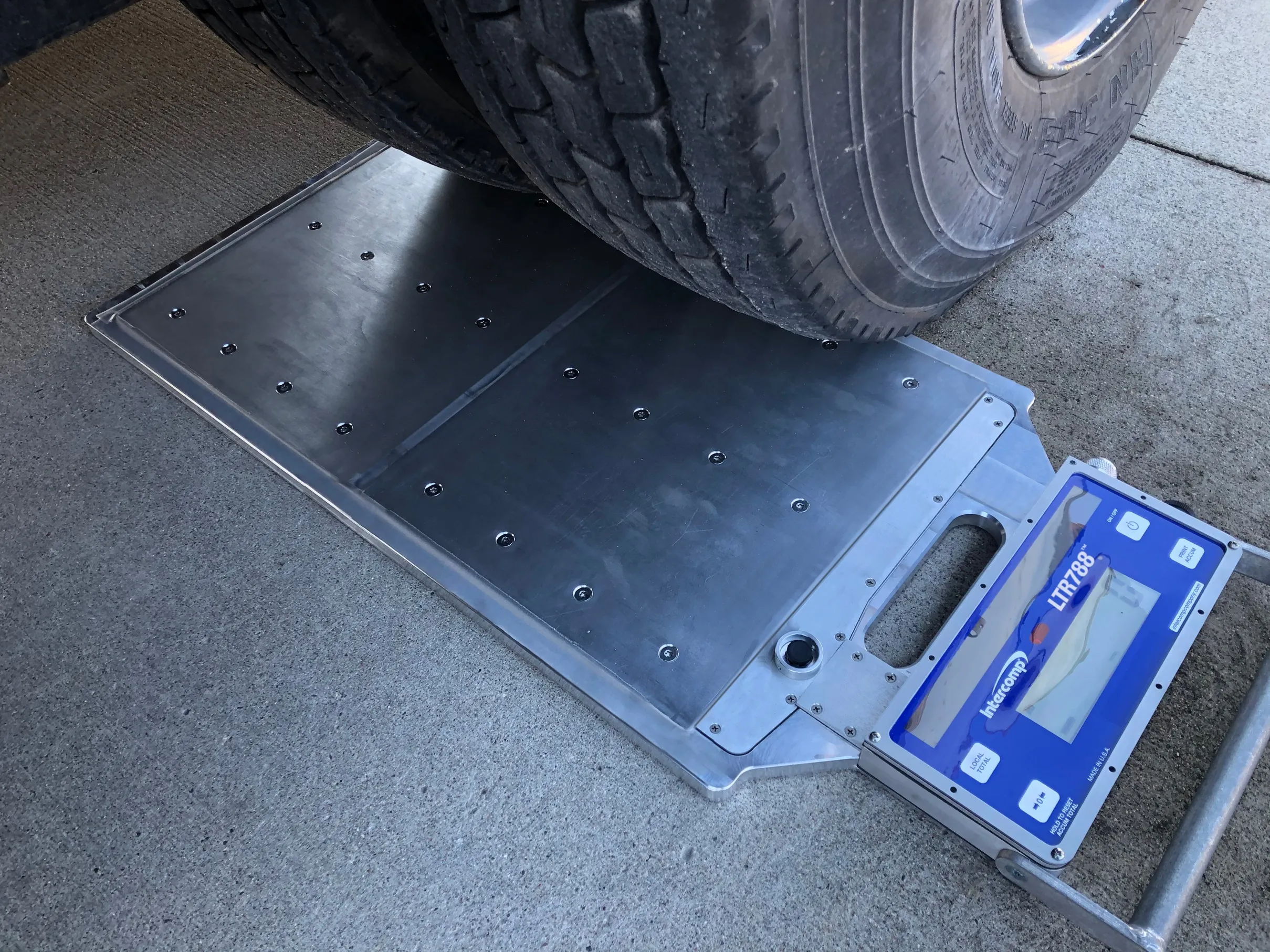
  • Intercomp launches LTR788 Dual Platform Scale
    April 30, 2024
    Product is suited to direct measurement of individual tyre loading in dual-tyre configuration
  • Free-flow tolling needs classification technology rethink
    February 2, 2012
    The move to all-electronic fee collection should be encouraging tolling authorities to look again at whether their vehicle classification criteria and technologies remain at all appropriate. Bob Lees of Idris Technology writes