Intel outlines AV limits of perception

CES 2021: Intel boss Amnon Shashua suggests radar and Lidar as redundant add-ons
By Ben Spencer January 12, 2021 Read time: 2 mins
Shashua: 'You have to be 1,000 times better than these statistics'

What is an acceptable failure rate of a vehicle's perception system?

And how does this influence the development and regulation of autonomous vehicles (AVs)?

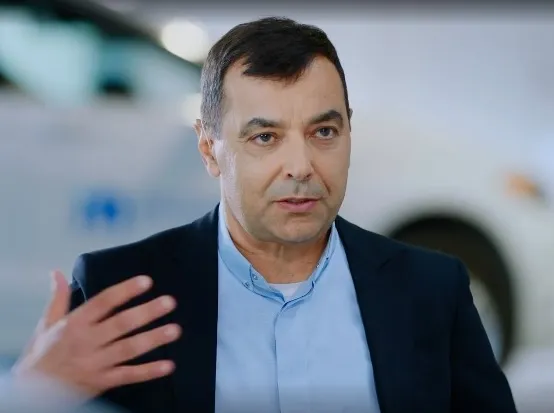
These were among the key areas covered by Professor Amnon Shashua, senior vice president of Intel and chief executive officer of Mobileye at this week's CES 2021 event.

In an online session, Shashua revealed the company measures failure rate in terms of hours of driving. 

“If we google, we will find out that about 3.2 trillion miles a year in the US are being travelled by cars and there are about six million crashes a year,” he said.

“So divide one by another, you get: every 500,000 miles on average there is a crash.”

“Let's assume that 50% it's your fault in a crash, so let's make this one million and let's divide this by 20 miles per hour on average, so we get about once every 50,000 hours of driving we'll have a crash,” he added. 

Shashua then applied this level of performance to a scenario involving a robotic machine and the deployment of 50,000 cars. 

“It would mean that every hour on average, will have an accident that is our fault because it’s a failure of the perception system,” he continued.

“From a business perspective this not sustainable, and from a society perspective, I don't see regulators approving something like this so you have to be 1,000 times better than these statistics.”

Mobileye is acutely aware of this, having just announced it will be testing AVs in new cities this year: Detroit, Tokyo, Shanghai, Paris and (pending regulation) New York City.

From a technological point of view, Shashua insisted it is “so crucial to do the hard work” and not combine all the sensors at the beginning and carry out a “low-level fusion – which is easy to do”.

“Forget about the radars and Lidars, solve the difficult problem of doing an end-to-end, standalone, self-contained camera-only system and then add the radars and Lidars as a redundant add-on,” he concluded. 

For more information on companies in this article

Related Content

  • Verifone and PayPal point way to retail’s connected future at CARTES
    November 3, 2014
    The emerging mobile shopping trends and technologies of the near future will be on show in the dedicated Connected Commerce Area at this year’s CARTES SECURE CONNEXIONS. Eleven hardware, service and payment solutions pioneers will offer hands-on demonstrations of emerging shopping solutions, says Angelo Caci, ADN’Co deputy director.
  • Brake, FTA welcome new guidelines on reporting medically ‘unfit’ drivers
    November 27, 2015
    Road safety charity Brake and the Freight Transport Association have welcomed the General Medial Council’s strengthened guidelines to all doctors emphasising their duty to disclose information to the Driver and Vehicle Licensing Agency (DVLA) or DVA (Northern Ireland), where the patient has failed to act. It’s a shift that’s welcomed by road safety charity, Brake, which has long called for greater clarity from the GMC. Gary Rae, director of communications and campaigns for the charity, said: “This is
  • E-tolling is the new normal
    April 29, 2020
    Electronic tolling has become a cornerstone for the next wave of innovation, says IBTTA’s Bill Cramer. So is this the end of the road for toll plazas?
  • The stage is set for an unforgettable experience
    April 16, 2024
    Welcome to Intertraffic Amsterdam 2024 - a showcase of innovation, collaboration, and inspiration. From groundbreaking technologies to visionary ideas, this event sets the stage for a future where mobility is not just smart, safe, and sustainable — but transformative. It’s showtime, and the stage is set for an unforgettable experience.