Seoul Robotics opens doors of perception

SENSR-I software can capture actionable data on movement of people and vehicles
March 25, 2022 Read time: 1 min
SENSR-I can simultaneously track the precise movements of people, vehicles and bicycles over expansive areas, says Seoul Robotics

Seoul Robotics has introduced an infrastructure-based version of its SENSR 3D perception software.

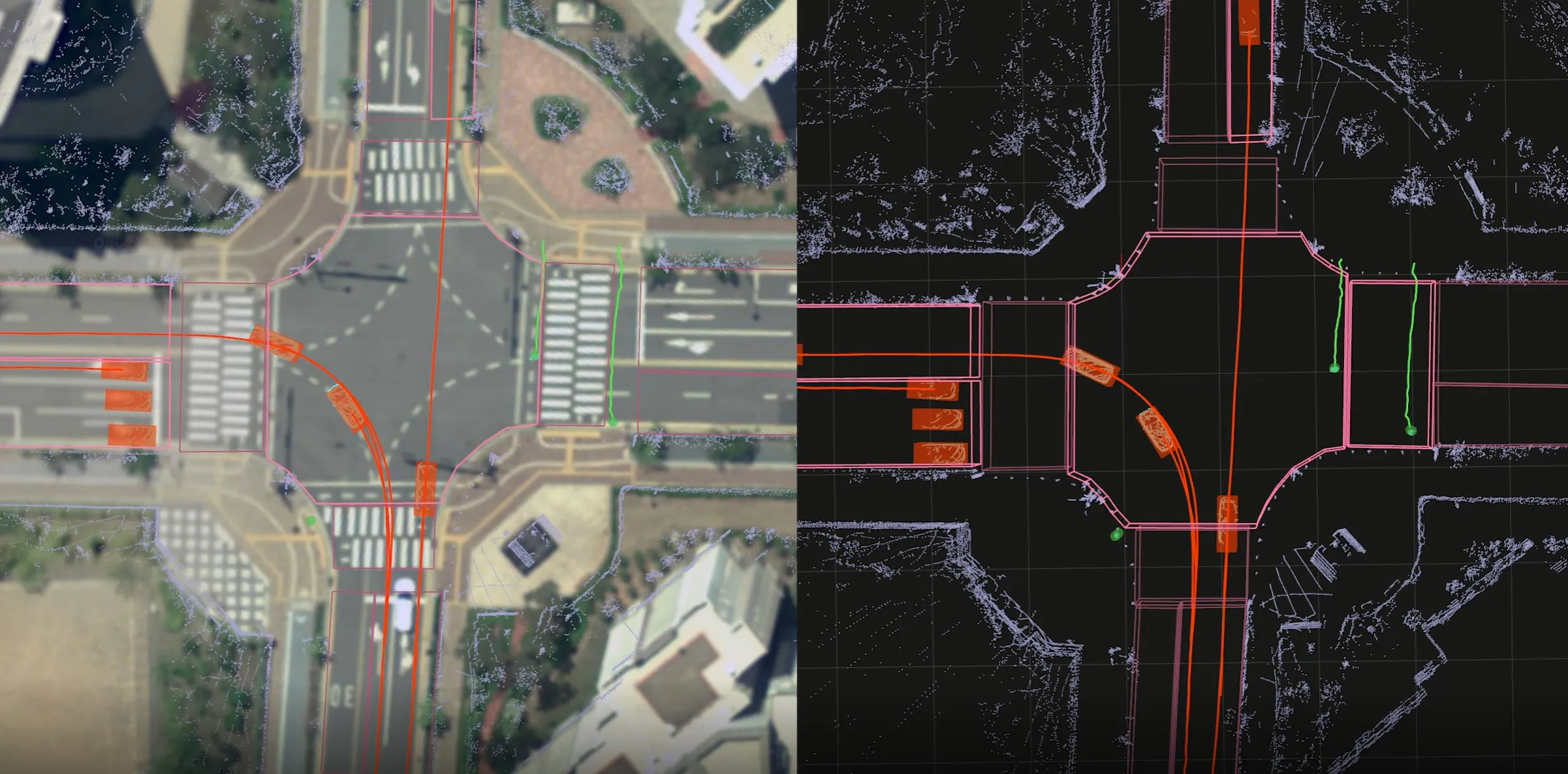
The new product, SENSR-I, processes data captured by 3D sensors to provide high-resolution environmental insights, enabling customers to see how people and vehicles move through large spaces. 

It supports anything from central processing to edge computing and is sensor- and hardware-agnostic, the company says.

When applied to 3D sensors on static infrastructure (indoors and outdoors), SENSR-I can precisely track within an error of 4cm.

“Until now, 2D cameras have been the only accessible, affordable solution, but that is no longer the case," says Jerone Floor, VP of products and solutions at Seoul Robotics.

"Indisputably, 3D systems enable organisations to get deeper, more actionable data. SENSR-I changes the game with its ability to simultaneously track the precise movements of people, vehicles and bicycles over expansive areas – unlocking unprecedented insights that can transform operations in ways never before possible."

3D analytics uses non-biometric data "with more robust 3D vision that is able to accurately detect object movement beyond what is visible from a single perspective, as well as track a single object across multiple sensors", Seoul adds.

The Korean government invested $12m in Seoul Robotics last year.

For more information on companies in this article

Related Content

  • LiDAR sets its sights on future problems
    February 23, 2017
    AAdvances in LiDAR are helping transport authorities improve services and identify potential problem areas, as geospatial technology expert Dr Neil Slatcher explains. The effects of climate change on the transport infrastructure have long been a cause of concern within the transportation sector - and not only on the structures themselves but also on the surrounding areas. This year, those concerns have become reality with landslides, structural collapses and surfacing issues impacting services across the wo
  • Auckland reduces airport journey times
    April 16, 2018
    Getting from the centre of Auckland to the city’s airport used to be fraught with unwanted stress for passengers – but a new system combining radar, Bluetooth and Wi-Fi is smoothing things over. Andrew Stone investigates. Struggling to cope with steady growth in passenger numbers and the costly traffic congestion which that can entail, New Zealand’s Auckland International Airport has deployed an innovative system that is smoothing traffic and passenger flows. The same system is also offering new, data-led
  • Communication: the future of machine vision
    May 30, 2013
    Jason Barnes asks leading machine vision industry figures what they consider to be the educational barriers to the technology’s increased uptake by the ITS sector. The recent rush by some organisations within the ITS sector to associate themselves with the term ‘machine vision’ underlines just how important the technology has become in a relatively short space of time. However, despite the technology having been applied in certain traffic management applications for some years, there remains a significant s
  • Bosch and Siemens introduce V2X platform
    March 18, 2021
    Integrated connected vehicle collective perception system combines cameras and RSUs