
Vayu delivery bots hit the road

Company says that its robot does not need Lidar and will 'slash' delivery costs
By David Arminas August 9, 2024 Read time: 2 mins
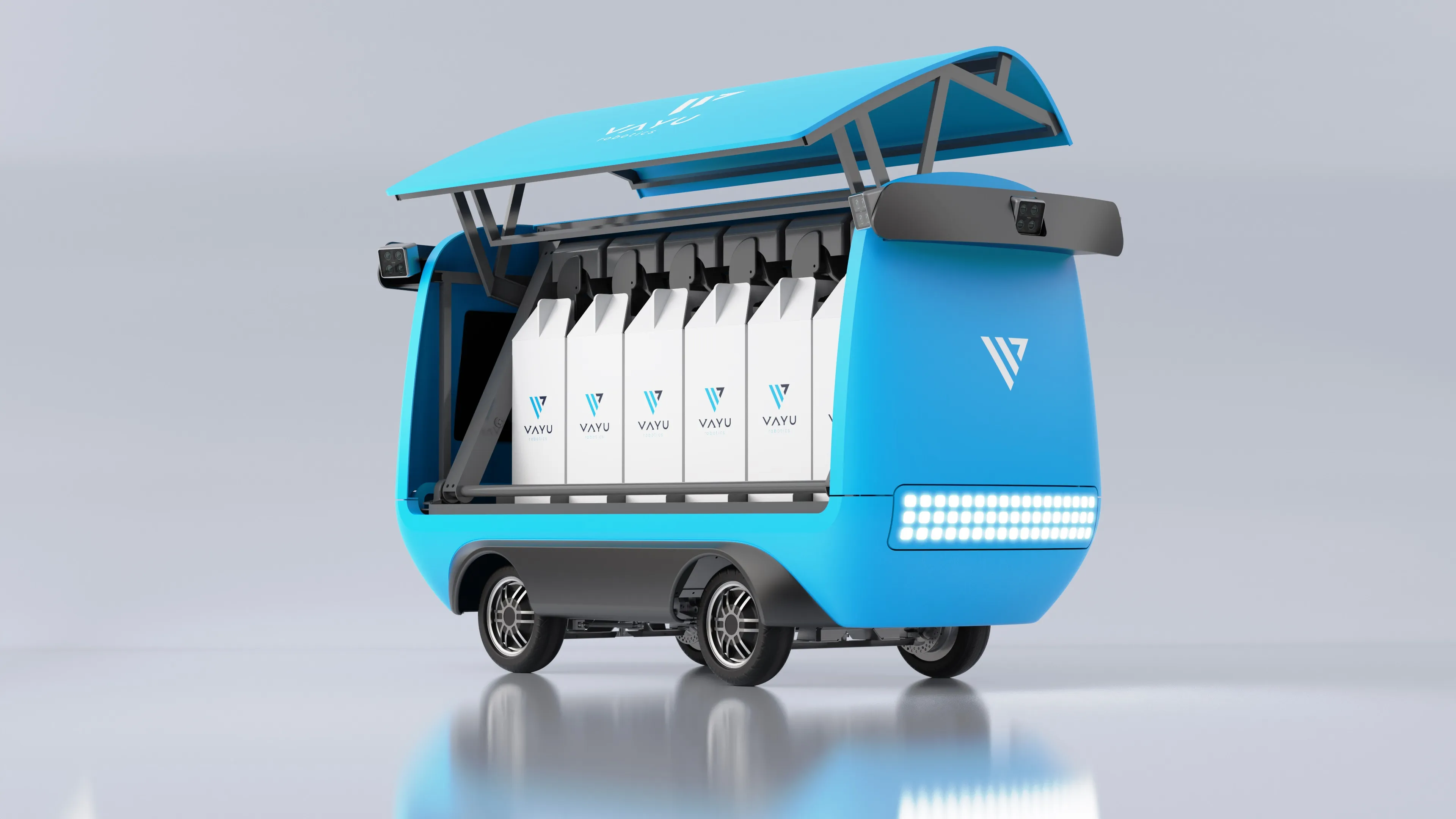
Vayu’s robot combines a transformer-based mobility foundation model with a powerful passive sensor (image: Vayu)

Vayu Robotics has released what it says is the “world’s first” on-road delivery robot that combines artificial intelligence with low-cost non-Lidar passive sensors.

The company says that its Delivery Robot will “slash” the cost of e-commerce deliveries. Vayu says that “this model is the first-of-its-kind, offering the most cost-effective, safe, reliable delivery system on the market".

Vayu’s robot combines a transformer-based mobility foundation model with a powerful passive sensor that, together, eliminate the need for Lidar. As a result, Vayu’s Delivery Robot operates autonomously without pre-mapping the roads upon which it intends to drive. It is also capable of navigating inside stores, on city streets and unloading packages on driveways or porches, carrying up to 100lbs at under 20mph.

The technologies employed by the robot has allowed Vayu to solve problems that have plagued delivery robots over the past decade, suggests co-founder Anand Gopalan, former chief executive of Lidar supplier Velodyne. Vayu says its Delivery Robots are already being debuted in real-world applications.

The company recently signed what it says is “a substantial commercial agreement” with “a large e-commerce player” to deploy 2,500 robots to enable ultra-fast goods delivery. Similar commercial deals are in the pipeline. Vayu is also working with a leading global robotics manufacturer to replace Lidar sensors with Vayu’s sensing technology for other robotic applications.

“In the near future, Vayu's software technology will enable the movement of quadrupedal and bipedal robots, allowing us to expand into those markets as well,” said Gopalan.

Vayu is financially backed by Khosla Ventures and Lockheed Martin Ventures.  
For more information on companies in this article

Related Content

  • IAM RoadSmart ‘unconvinced about value of Edinburgh 20mph scheme’
    July 29, 2016
    IAM RoadSmart says it is unconvinced of value of the decision by City of Edinburgh Council to impose a 20mph speed limit on the vast majority of the capital’s streets as of 31 July. The multi-million pound scheme is the first of its kind in Scotland and will affect more than 80 per cent of the city’s roads. IAM RoadSmart, the UK’s independent road safety charity stated that the proposals amounted to a city-wide limit that didn’t address specific problematic roads. Neil Greig, IAM RoadSmart policy a
  • ITS World Congress looks to new horizons in Montréal
    March 29, 2017
    ITS World Congress 2017 will highlight transformational technologies, integrated mobility and smart cities. “Today’s global transportation industry is at a transformational tipping point,” says Regina Hopper, president and CEO of the Intelligent Transportation Society of America (ITS America).
  • Wilco invests in StreetDrone delivery AV
    September 16, 2021
    High street retailer sees autonomous retail deliveries as part of its future customer offer
  • When will Google wake up to MaaS gold mine?
    December 3, 2018
    Mobility services are a potential gold mine for data-hungry tech companies. That being the case, Andrew Bunn asks: what exactly happens when giants such as Google and Amazon decide to get their teeth into MaaS? There are many different perspectives on Mobility as a Service (MaaS), with many different views on what the latest and future applications of technology are going to bring to transportation infrastructure. However, there is one question that does not seem to come up at all. Up to now, MaaS-relate




