Vayu delivery bots hit the road

Company says that its robot does not need Lidar and will 'slash' delivery costs
By David Arminas August 9, 2024 Read time: 2 mins
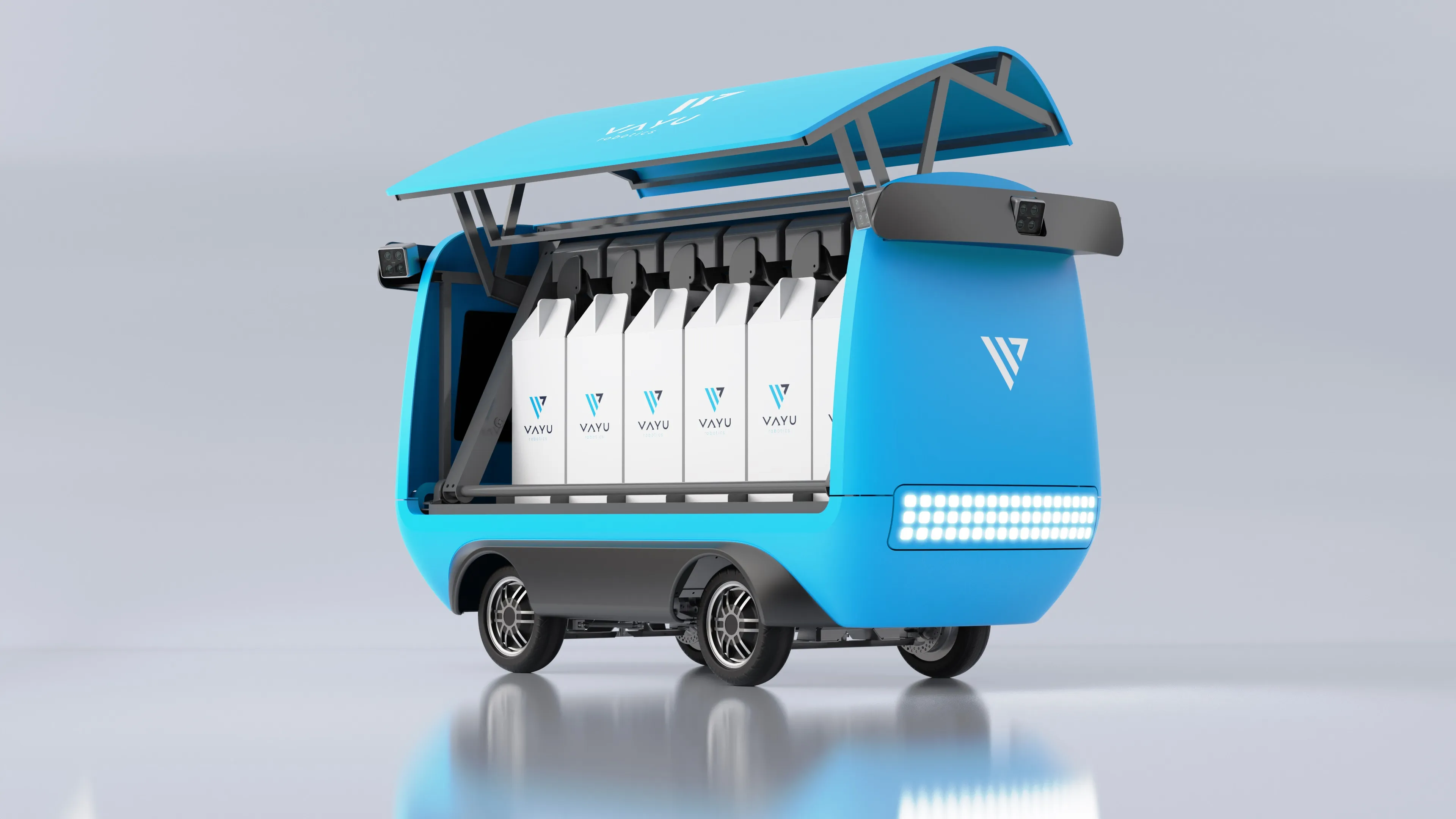
Vayu’s robot combines a transformer-based mobility foundation model with a powerful passive sensor (image: Vayu)

Vayu Robotics has released what it says is the “world’s first” on-road delivery robot that combines artificial intelligence with low-cost non-Lidar passive sensors.

The company says that its Delivery Robot will “slash” the cost of e-commerce deliveries. Vayu says that “this model is the first-of-its-kind, offering the most cost-effective, safe, reliable delivery system on the market".

Vayu’s robot combines a transformer-based mobility foundation model with a powerful passive sensor that, together, eliminate the need for Lidar. As a result, Vayu’s Delivery Robot operates autonomously without pre-mapping the roads upon which it intends to drive. It is also capable of navigating inside stores, on city streets and unloading packages on driveways or porches, carrying up to 100lbs at under 20mph.

The technologies employed by the robot has allowed Vayu to solve problems that have plagued delivery robots over the past decade, suggests co-founder Anand Gopalan, former chief executive of Lidar supplier Velodyne. Vayu says its Delivery Robots are already being debuted in real-world applications.

The company recently signed what it says is “a substantial commercial agreement” with “a large e-commerce player” to deploy 2,500 robots to enable ultra-fast goods delivery. Similar commercial deals are in the pipeline. Vayu is also working with a leading global robotics manufacturer to replace Lidar sensors with Vayu’s sensing technology for other robotic applications.

“In the near future, Vayu's software technology will enable the movement of quadrupedal and bipedal robots, allowing us to expand into those markets as well,” said Gopalan.

Vayu is financially backed by Khosla Ventures and Lockheed Martin Ventures.  

For more information on companies in this article

Related Content

  • ITS asset management matters
    April 26, 2013
    Maintenance of on-road ITS kit needs to become more sophisticated; while new technologies can deliver better road maintenance. David Crawford investigates both sides of the issue "Good information is key to effective ITS asset maintenance,” says Ian Routledge of the Ian Routledge Consultancy (IRC), whose Imtrac (Information Management for TRAffic Control) system is poised for European expansion. Developed as an ‘intelligent filing cabinet’ for storing information about on-road equipment, the online database
  • Enforcement comes in many guises
    June 22, 2016
    Colin Sowman looks at some enforcement case studies from around the world. It is a sad fact of life that unenforced laws are not adhered to by a sometimes sizable proportion of the public and once enforcement is seen to be lacking, some drivers can take this to extremes and authorities must decide how to regain control.
  • Conscience versus convenience
    June 8, 2015
    David Crawford looks at new ways forward for public transport. By 2025, nearly 60% of the world’s population will be living in towns and cities, increasing their extent and density, and the journeys that people make within and between them. In response, the International Association of Public Transport (UITP) wants to see public transport’s global modal share doubling (PTx2) by the same date. “Success in 2025,” a spokesperson told ITS International, “will save 170 million tonnes of oil equivalent and 550
  • Hyperloop: from sci-fi to transport policy
    April 16, 2020
    The future is here. While it has long looked like something from a sci-fi movie, Graham Anderson investigates a technology whose time might have come.