Kyocera makes V2I connection

Company will display variety of sensors and imaging solutions at Yokohama exhibition
By Adam Hill May 25, 2022 Read time: 1 min
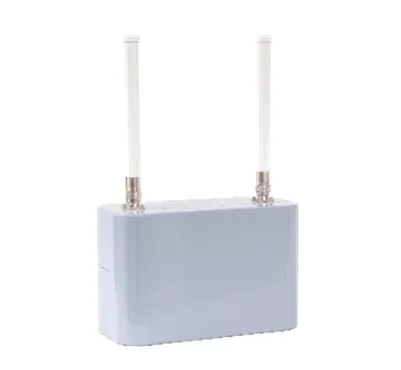
Kyocera's V2I RSU can connect sensors and transmit blind-spot information to alert drivers  

Kyocera Corporation is showing off a number of its sensors and imaging solutions Japan’s Automotive Engineering Expo 2022 in Yokohama this week.

These include smart Vehicle to Infrastructure (V2I) roadside units (RSUs) designed for installation on utility poles and traffic lights at intersections with poor visibility.

They collect information from road infrastructure, such as pedestrian and vehicle locations and traffic light information, and wirelessly communicate the details to vehicles and bicycles.

In addition, the smart V2I RSUs can connect sensors, such as cameras and other devices, and transmit blind-spot information to alert drivers.
 
Kyocera is also demonstrating a hologram of an autonomous bus equipped with stereo cameras, millimeter-wave radar and peripheral detection cameras, as well as a vehicle electronic control unit (ECU) jointly developed with Advanced Smart Mobility Co.
 
It will display two new critical image technologies: the Driving Visibility Expansion System, which displays the most suitable view for the driver and shows the presence of pedestrians, including side- and rear-view angles; and its Optical Camouflage Technology, developed in collaboration with Professor Masahiko Inami of the University of Tokyo Advanced Science and Technology Research Center, which reduces blind spots by making dashboards and pillars appear transparent.  
 

For more information on companies in this article

Related Content

  • Intelligent powertrains could make cost cuts
    April 30, 2020
    Intelligent vehicle powertrains could be a way of making substantial cuts in operating costs and emissions. David Crawford looks at some far-reaching initiatives in Europe and North America
  • Progress of ICT transport research projects
    February 3, 2012
    Juhani Jääskeläinen, head of the ICT for Transport Unit, DG Information Society and Media, European Commission, details the results of Call 4 for research projects in ICT for transport. Since the closure of the call and evaluation process during the summer of last year the European Commission (EC) has been negotiating and signing contracts with projects which were selected from proposals submitted to Call 4 of the 7th Framework Programme (FP7) in the area of Information and Communication Technology (ICT) fo
  • Avoiding the call of the wild
    June 29, 2018
    Hitting an animal on a rural road can be fatal for all parties involved – but detecting and avoiding them requires clever technology. Andrew Williams carefully scans the horizon for details. Wildlife-vehicle collisions are an ever-present threat in rural areas around the world, and there is certainly nothing funny about suddenly finding an angry moose in your headlights on a sharp bend. A variety of detection and avoidance systems are currently in use or under development to help prevent your vehicle being
  • Traffic cameras embrace AI
    December 19, 2022
    Artificial intelligence is spreading into many aspects of mobility – but what about traffic management and enforcement cameras? ITS International invited a few vision experts to ponder a couple of leading questions…