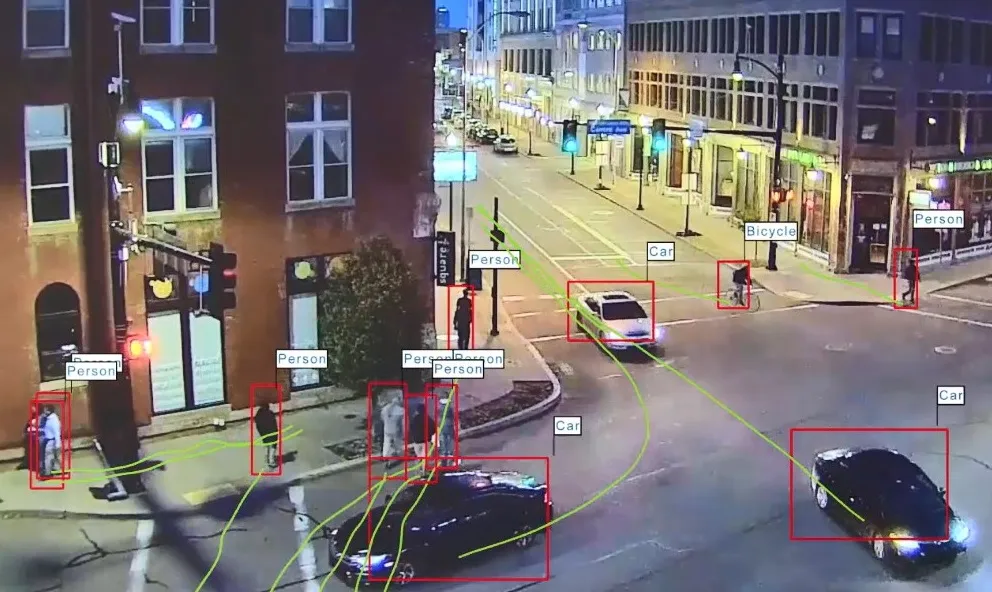
The Australian city of Adelaide, which has embarked on a 30-year urban development plan, is piloting Xerox’s new Mobility Analytics Platform (MAP) to improve its public transport services by analysing people flows between different sectors of the city.
The recently-introduced analytics platform analyses the anonymous data created by the daily transportation and ticket-buying habits of millions of commuters and produces a new city-wide picture of transportation operations including adherence to schedules

The Australian city of Adelaide, which has embarked on a 30-year urban development plan, is piloting 4186 Xerox’s new Mobility Analytics Platform (MAP) to improve its public transport services by analysing people flows between different sectors of the city.
The recently-introduced analytics platform analyses the anonymous data created by the daily transportation and ticket-buying habits of millions of commuters and produces a new city-wide picture of transportation operations including adherence to schedules, passenger-loading levels and car park utilisation rates.
Using data analytics algorithms and visualisation technology from the Xerox Research Centre Europe, it can predict, for example, where passengers will alight and the impact of varying factors such as running ahead or behind schedule and the weather.
In Paris, Vinci Park is testing the system in Neuilly, in the western suburbs of the city, where it manages on- and off-street parking. The operator is using MAP to better understand how its off-street car parks are used. In a second step, this parking information will be combined with MAP’s advanced customer profiling features to predict future demand for parking, inform Vinci Park on how to modify prices, identify when extra access lanes are required or even where new car parks should be created.
"MAP gives operators the keys to improving the quality and adoption of services,” said Jo van Onsem, group president, International Public Sector, Xerox.
“With MAP we now have a user friendly graphical tool that allows us to analyse quickly and accurately the use and revenues of our car parks,” said Albert Feuga, director, Parking Management System, Vinci Park. “MAP also allows us to understand the behaviour of our customers and better anticipate demand and manage flows.”
The recently-introduced analytics platform analyses the anonymous data created by the daily transportation and ticket-buying habits of millions of commuters and produces a new city-wide picture of transportation operations including adherence to schedules, passenger-loading levels and car park utilisation rates.
Using data analytics algorithms and visualisation technology from the Xerox Research Centre Europe, it can predict, for example, where passengers will alight and the impact of varying factors such as running ahead or behind schedule and the weather.
In Paris, Vinci Park is testing the system in Neuilly, in the western suburbs of the city, where it manages on- and off-street parking. The operator is using MAP to better understand how its off-street car parks are used. In a second step, this parking information will be combined with MAP’s advanced customer profiling features to predict future demand for parking, inform Vinci Park on how to modify prices, identify when extra access lanes are required or even where new car parks should be created.
"MAP gives operators the keys to improving the quality and adoption of services,” said Jo van Onsem, group president, International Public Sector, Xerox.
“With MAP we now have a user friendly graphical tool that allows us to analyse quickly and accurately the use and revenues of our car parks,” said Albert Feuga, director, Parking Management System, Vinci Park. “MAP also allows us to understand the behaviour of our customers and better anticipate demand and manage flows.”