Siemens to develop infrastructure for London's ULEZ

Siemens will develop software for London’s Ultra Low Emission Zone (ULEZ) with the intention of ensuring that the necessary infrastructure is in place for when it goes live in April 2019. The zone will require vehicles, barring some exceptions, to meet exhaust emissions standards or pay a daily charge when travelling into central London. Work will now commence over the next 12 months to allow the software to be deployed for service preparation activities leading up to the scheme. The ULEZ is intended
March 14, 2018 Read time: 2 mins
189 Siemens will develop software for London’s Ultra Low Emission Zone (ULEZ) with the intention of ensuring that the necessary infrastructure is in place for when it goes live in April 2019. The zone will require vehicles, barring some exceptions, to meet exhaust emissions standards or pay a daily charge when travelling into central London.


Work will now commence over the next 12 months to allow the software to be deployed for service preparation activities leading up to the scheme.

The ULEZ is intended to reduce exhaust nitrogen oxide and particulate matter emissions to make the area a safer and better place to live, work and visit. It aims to be especially beneficial to younger and older people as well as those with respiratory problems and residents in high pollution areas. The reduced emissions are also said to benefit areas outside of the zone as traffic moving into the ULEZ also comes from outside of it.

Matthew Vincent, Siemens ITS, sales and marketing director, said: “As cities continue with their aspirations to improve the air quality, increasingly they need to revert to the implementation of a Clean Air Zone (CAZ) or Low Emission Zones (LEZ). Siemens is proud that its technology has been chosen in London and we look forward to working with other cities and regions in developing their own implementation of scalable LEZ/CAZ solutions that support their local needs”.

For more information on companies in this article

Related Content

  • Smart phones offer smarter way to pay for travel
    December 16, 2013
    David Crawford reviews developments in near field communications for mass transit payments. ‘A carefully-designed and well-implemented mobile near field communications (NFC) solutions can give passengers a compelling experience that will encourage them to make greater use of public transport.’ That was the confident conclusion of a recent joint White Paper drawn up by the International Association of Public Transport and the global mobile operators’ representative group GSMA.
  • Tolling is still stuck on the sidelines says ASECAP speaker
    August 19, 2015
    Geoff Hadwick attended ASECAP’s 2015 Study Days meeting in Lisbon and found a frustrated European tolling sector undertaking some soul searching. The international road tolling industry its failing to make it case and the sector is losing out to a range of other socio-political lobby groups according to International Bridge, Tunnel and Turnpike Association (IBTTA) chief executive Pat Jones. Speaking at the recent 2015 ASECAP Study Days conference in Lisbon, Jones issued a stark warning: “Tolling is still o
  • New York to start congestion charging 'from January 2025'
    November 15, 2024
    Final approval for delayed scheme still required as $15 toll lowered to $9
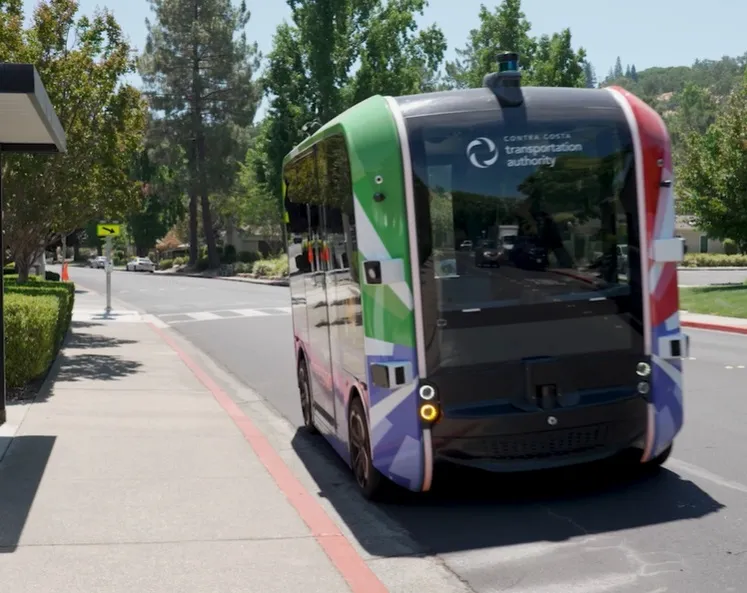
  • Second senior AV moment for Contra Costa, Beep & Oxa
    August 21, 2024
    California county launches another Presto pilot to transport 55+ community around