
New Zealand speed limits will be increased if National wins next election

'Blanket approach' to speed reduction under Labour government will end, opposition says
By Adam Hill September 28, 2023 Read time: 1 min
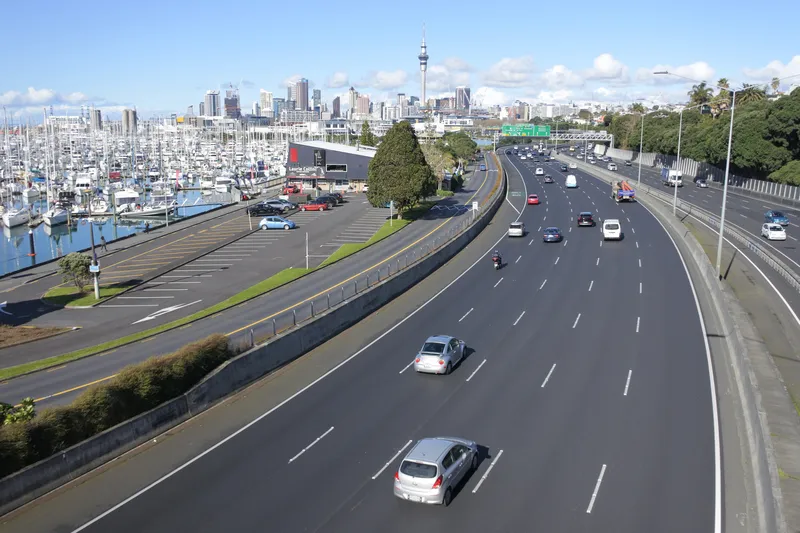
New Zealand highways: speeding up again? (© Rafael Ben Ari | Dreamstime.com)

New Zealand's opposition National party has said it will roll back some of the ruling Labour party's reforms on road speed limits.

The speed reductions were designed to improve road safety.

The country holds a general election on 14 October - and if National wins, it says that it will look at increasing speed limits on new highways to 110km/h, while returning many state highways to 100km/h (up from 80km/h) and local roads to 50km/h (up from 30km/h).

The party's transport spokesman Simeon Brown said: "Where it's safe to do so, we will reinstate the previous speed limit."

He also said changes were required to the way highway workzones were operated, with "unecessary" use of road cones and temporary speed limit restrictions to be looked at "while also maintaining the health and safety of our road workers".

National has criticised what it calls Labour's "blanket approach" to speed limits and wants to speed up traffic.

"This inflexible approach is unnecessarily slowing Kiwis down and harming economic activity by increasing travel times," insisted National leader Christopher Luxon. 

A win for his party would lead to "a more balanced approach", he added.

Related Content

  • ITS World Congress debates perceptions of enforcement
    December 4, 2012
    The technical programme of this year’s ITS World Congress in Vienna includes a special session on the image of enforcement. ITS International examines the scale of the problem and what can be done about it. Debate on the merits and difficulties of enforcing speed limits appears centred on a conflict of principles. Put very simply, local communities, people living close to busy or hazardous roads, want to see traffic speeds calmed. Drivers on those roads, on the whole, want their principle of freedom to be m
  • SCANaCAR and VideoBadge counter parking’s prickly problems.
    June 4, 2014
    Colin Sowman discovers how the latest systems can boost productivity and reduce conflict in parking enforcement. Parking enforcement is something of a ‘Cinderella’ service for local authorities: while necessary to keep the roads open and the traffic flowing, it is an expensive operation and can be loss-making. It is also labour intensive and parking enforcement officers are routinely verbally abused and sometimes physically attacked. Some authorities are now looking to automate parking enforcement in orde
  • Substantial savings from smarter street lighting
    February 25, 2015
    As authorities strive to reduce expenditure and carbon emissions, Colin Sowman looks at some of the smart ways of managing street lighting while containing costs and maintaining safety. Street lighting can account for 40% of an authority’s energy consumption. So, faced with the need to reduce outgoings, some authorities are looking for smart ways of managing street lighting or even turning off swathes of street lights in the small hours. Back in 2008 the E-street Initiative report concluded that authorities
  • Viaduct deck renewal creates detour dilemma for MassDOT
    May 26, 2016
    As the deck renewal of the I-91 viaduct in Springfield gets underway, David Crawford looks at the preparation and planning to ease the resulting traffic congestion. Accommodating the deck renewal of a 4km-long/four-lanes in each direction viaduct in the heart of Springfield (Massachusetts’ third largest city), has involved the state’s Department of Transportation (MassDOT) in a massive exercise in transport research and ITS-based area-wide preplanning and traffic management. Supporting a workzone of well ab




