
Safety drive finds speed violators on Kansas highways

Kansas DoT's five-year Safety Corridor Pilot Program reaches end of first year
By Adam Hill September 9, 2024 Read time: 2 mins
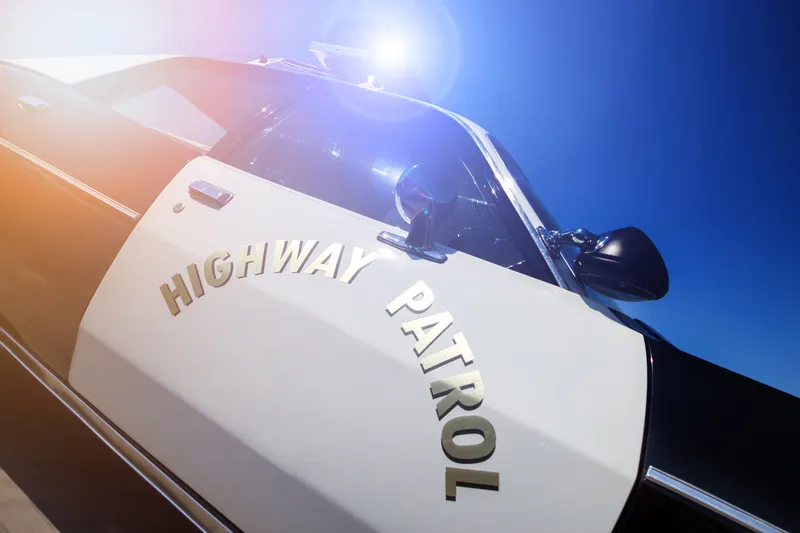
Increased police presence 'on and near the four designated safety corridors deters dangerous driving behaviours that cause an increased risk for crashes' (© VanderWolfImages | Dreamstime.com)

Kansas Department of Transportation (KDoT) and the Drive To Zero Coalition have finished the first year of their five-year Safety Corridor Pilot Program

This aims to cut fatalities and serious injuries on four highway corridors - stretches of I-135, US 83/50, US 69 and US 24, with each spanning 10 to 35 miles of Kansas highway - by increasing the presence of state and local law enforcement.

“We know driver behaviour improves when motorists expect and see law enforcement,” said Transportation Safety Bureau chief Vanessa Spartan. “Law enforcement officers are dedicated to helping save lives on our highways, and their efforts on the safety corridors are making an impact.”

The safety corridors are clearly marked with yellow “Safety Corridor/Increased Enforcement” signage and between October 2023 and June this year, almost 2,600 contacts were made with the travelling public

These interactions ranged from warnings to citations - the most common of which was for speeding more than 10 mph over the speed limit.

Erik Smith, superintendent of the Kansas Highway Patrol, says: “An increased presence on and near the four designated safety corridors deters dangerous driving behaviours that cause an increased risk for crashes. Ensuring that every motorist makes it to their destination safely will continue to be a focus of law enforcement partners across Kansas.”

KDoT's enforcement, education messaging are planned to continue through 2028. 

For more information on companies in this article

Related Content

  • Connected vehicle technology the solution to safety?
    January 25, 2012
    A series of 'driver clinics' is under way across five states, as vehicle manufacturers and the US Government pin their hopes on connected vehicles becoming the next big advance in road safety. Pete Goldin reports. What would a car say if it could talk? Its first words might be: "Here I am". Many vehicles are communicating that very message to each other right now. Admittedly, this is in controlled environments of US Department of Transportation (USDoT) tests, but within the next few years 'connected vehicle
  • More Americans relying on toll roads, says report
    July 3, 2015
    A new report issued by the International Bridge, Tunnel and Turnpike Association (IBTTA) in advance of the busy Fourth of July holiday travel season indicates that as Americans take to the roads this summer they will more often choose toll roads to get them to their destinations than in years past. The report, 2015 Report on Tolling in the US, reveals that the number of trips drivers have taken on tolls roads has increased 14 per cent over the last four years, rising from 5 billion trips in 2011 to 5.7 b
  • US enforcement regulation to deliver clearer guidelines?
    February 2, 2012
    Jim Tuton of American Traffic Solutions looks at the evolution of automated enforcement in North America "Technological regulation will become more sophisticated at the federal level, giving states clearer guidelines" Jim Tuton In just 20 years, photo enforcement in North America has grown from a single speed camera in a small town in Arizona to thousands of photo traffic enforcement cameras which are now operating in 350 communities spread across 27 states and three Canadian provinces. Most of these p
  • Turning off red light cameras costs lives, new research shows
    July 29, 2016
    Red light camera programs in 79 large US cities saved nearly 1,300 lives through 2014, researchers from the Insurance Institute for Highway Safety (IIHS) have found. Shutting down such programs has cost lives, with the rate of fatal red-light-running crashes shooting up 30 per cent in cities that have turned off cameras. Red-light-running crashes caused 709 deaths in 2014 and an estimated 126,000 injuries. Red light runners account for a minority of the people killed in such crashes. Most of those killed




