
Innoviz bridges gap in infrastructure safety with collision detection

Bridge Collision Detection system rolled out in Israel with toll operator Drive Group
By Adam Hill June 26, 2023 Read time: 2 mins
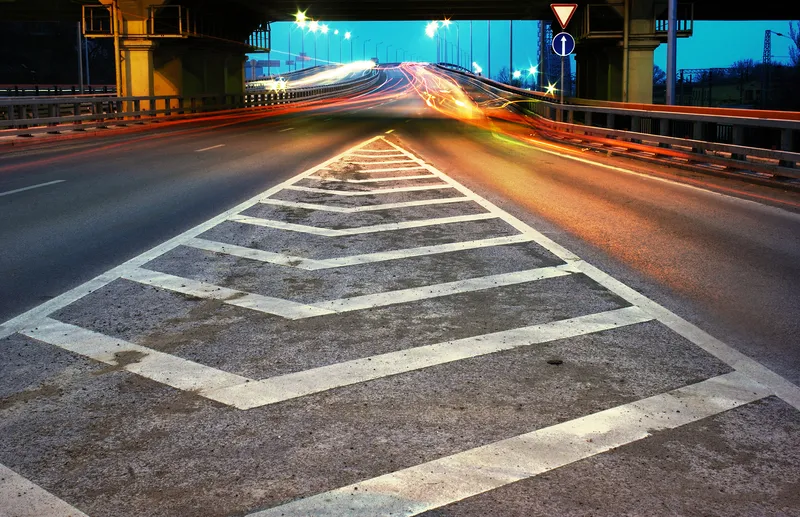
Innoviz suggests bridge collisions in the US cost an average of $18,000 each to repair (© Gregx11 | Dreamstime.com)

Lidar specialist Innoviz Technologies is to deploy its Bridge Collision Detection solution on highways, tunnels and bridges across Israel.

The company has an agreement with toll operator Drive Group to roll out the technology, and says that around 15,000 bridge and tunnel collisions occur each year in the US, with an average cost for repair of $18,000 per incident.

Its solution uses data gathered from Innoviz Lidar sensors from both sides of a highway, several kilometres ahead of the entrance to a bridge or tunnel.

This system establishes a safe operating zone and identifies vehicles with heights or widths exceeding predefined ranges determined by the road operator.

System alerts can trigger a camera to identify and share licence plate information with local authorities, who can intervene and stop the vehicle to prevent potential collisions.

"There is no reason to accept the present situation of bridge and tunnel accidents," says Innoviz CEO and co-founder Omer Keilaf.

"It is estimated that 2-3% of the world's bridges are damaged every year, and we believe the technologies being developed at Innoviz can be a game changer for roadways across the world."

Innoviz says its method "shows potential in significantly reducing false alarms from camera–based software systems"

It adds that a Lidar-based system offers "a truer, more accurate 3D visualisation of a vehicle's dimensions".

Drive Group is set to become a global distributor of the technology for highway and local authority customers.

CEO Itamar Ben Meir says it has "found a potentially world-leading solution right here in Israel".

For more information on companies in this article

Related Content

  • New services and equipment helps cities tackle air quality issues
    September 19, 2017
    With poor urban air quality shortening lives and fines being imposed for breaching pollution limits, authorities are seeking ways to clean up their cities. Poor air quality is topping the agenda for city authorities across the globe. In the UK, for example, a report from the Royal Colleges of Physicians and of Paediatrics and Child Health, concluded that poor outdoor air quality shortens the lives of around 40,000 people a year – principally by undermining the health of people with heart and/or lung prob
  • Top 5 trends in vision technology
    June 24, 2021
    Artificial intelligence and deep learning algorithms are among the major trends having an impact on road traffic enforcement, according to leading companies in the vision sector
  • Sign language reduces human error says Clearview
    September 26, 2019
    Wrong-way warning systems and advanced queue detection can help to reduce human error. They can also cut road accidents – and therefore road deaths, says Clearview Intelligence Where were nearly 1,800 deaths on the UK’s roads in 2018 – an average of five people dying each day. The largest single cause of serious injury is crashes at junctions (accounting for 33% of incidents), while the largest single cause of death was run-off road crashes (30%) “With vehicles increasingly being designed with saf
  • Here’s HD AV map prepared for 5G
    June 17, 2019
    The emergence of 5G may not be necessary to provide a high-definition map for autonomous driving, says Matt Preyss from Here Technologies. Ben Spencer asks why 5G is a hot topic worldwide, with the potential for faster transfer of information eagerly awaited by those convinced that it will be a game-changer for the ITS industry. High-definition (HD) maps are essential to allow autonomous vehicles (AVs) to understand their environment, and operate safely within it in relation to other road users and p




