
Jenoptik up to speed with fuel cell deal

Agreement with SFC Energy sees speed measurement systems powered off-grid
By Adam Hill April 14, 2021 Read time: 2 mins
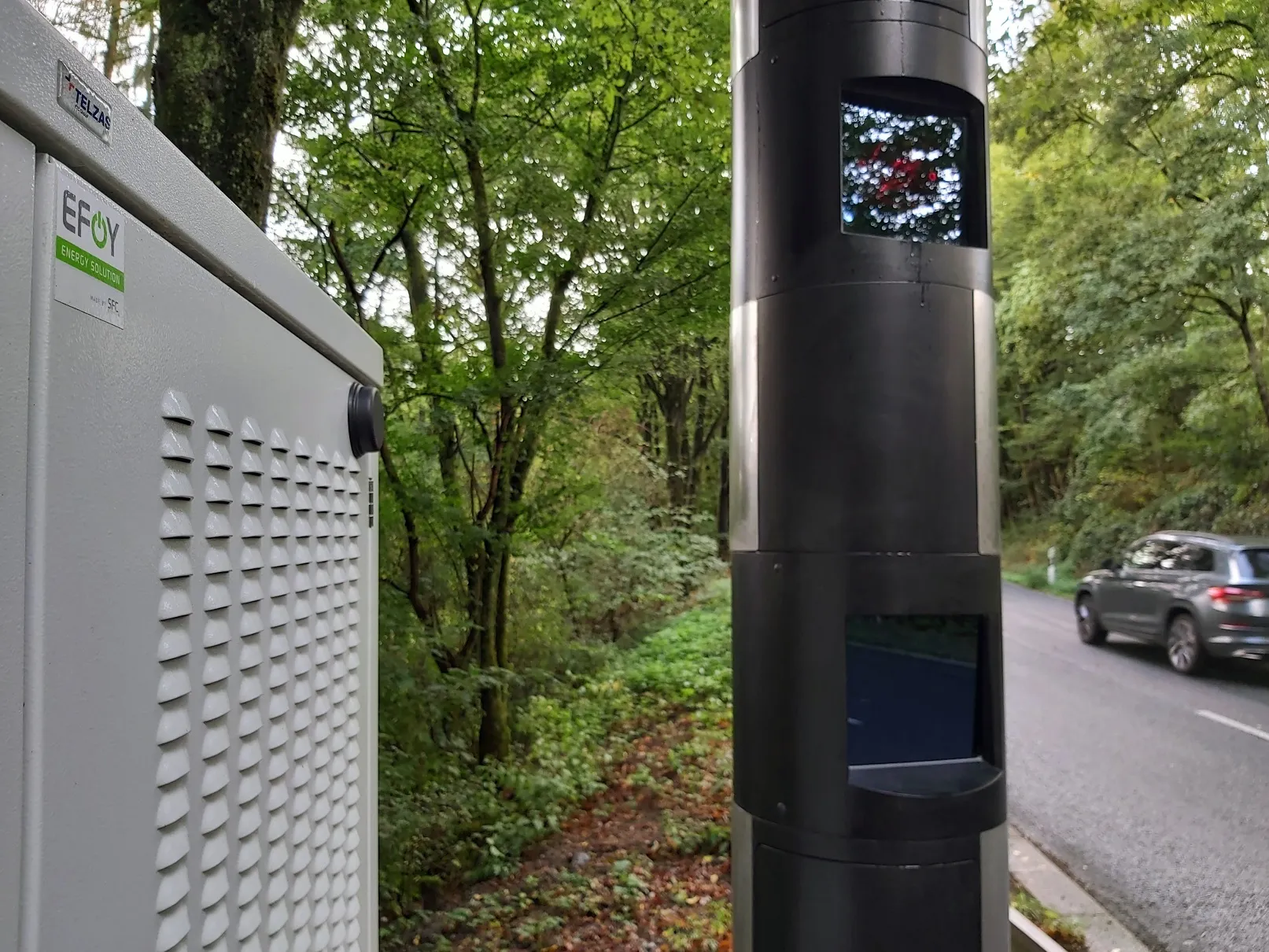
SFC's fuel cell tech means Jenoptik speed systems can be available off-grid (© Mona Mittelstädt | SFC Energy AG)

Jenoptik's roadside speed measurement systems will be powered by fuel cell technology which is available off-grid as part of a new deal.

The firm has signed an agreement with SFC Energy, which specialises in hydrogen and methanol fuel cells for stationary and mobile hybrid power generation solutions.

SFC’s Efoy fuel cells are described as a “completely self-sufficient, location-independent and sustainable energy supply”.

This means they could be attractive for traffic enforcement apparatus in places where power sources are unreliable or non-existent – for example, on very remote rural roads.

“This partnership moves us and many cities forward in terms of traffic safety and sustainability,” says Tobias Deubel, vice president global sales at Jenoptik’s Light & Safety division.

“It enables us to tap into new alternative energy sources for our devices and delivers significant added value to our customers with the possibility to deploy our measurement systems also in regions with less developed power grids.”

The first systems are already in operation in several European countries, SFC says.

It adds that there are “considerable” potential savings because of Efoy’s lower fuel consumption compared to conventional generators – plus they do not emit harmful exhaust gases such as nitrogen oxides (NOx), carbon monoxide (CO) or particulate matter. 

Unlike solar panels, the fuel cell technology is not dependent on the weather.

“The potential of the fuel cell comes to impressive fruition in the Jenoptik systems,” says Dr. Peter Podesser, CEO of SFC. “We have the opportunity to make important contributions on several levels at once: environmental protection and traffic safety.”

 

For more information on companies in this article

Related Content

  • Methanol range extender for fuel cell vehicle
    July 17, 2012
    The innovative QBeak electric car is to benefit from a sophisticated methanol fuel cell range extender that will give it a range of at least 800km. Development work is being carried out on the project by a consortium of Danish companies. The plan is to develop a novel, range-extended electric vehicle that uses biomethanol as a fuel source. TheModularEnergyCarrier concept (MECc) project has just been granted funding from the Danish government. The reworked electric car is expected to deliver high market pote
  • L-Charge joins CharIn network
    April 13, 2022
    Mobile charging solution, soon to hit London, can be prescheduled or summoned with an app
  • Next-generation fuel cells ready for low-emission electricity production
    November 25, 2015
    The VTT Technical Research Centre of Finland, under the INNO-SOFC project and in collaboration with Convion and Elcogen, is developing a new-generation, long-life fuel cell system offering efficiency higher than that of competing technologies. The project aims to develop new, energy-efficient and commercially viable applications.
  • New services and equipment helps cities tackle air quality issues
    September 19, 2017
    With poor urban air quality shortening lives and fines being imposed for breaching pollution limits, authorities are seeking ways to clean up their cities. Poor air quality is topping the agenda for city authorities across the globe. In the UK, for example, a report from the Royal Colleges of Physicians and of Paediatrics and Child Health, concluded that poor outdoor air quality shortens the lives of around 40,000 people a year – principally by undermining the health of people with heart and/or lung prob




