Queensland C-ITS safety boost

Bruce Highway project involving Kapsch TrafficCom expected to reduce crashes by 20%
By Adam Hill August 16, 2022 Read time: 2 mins
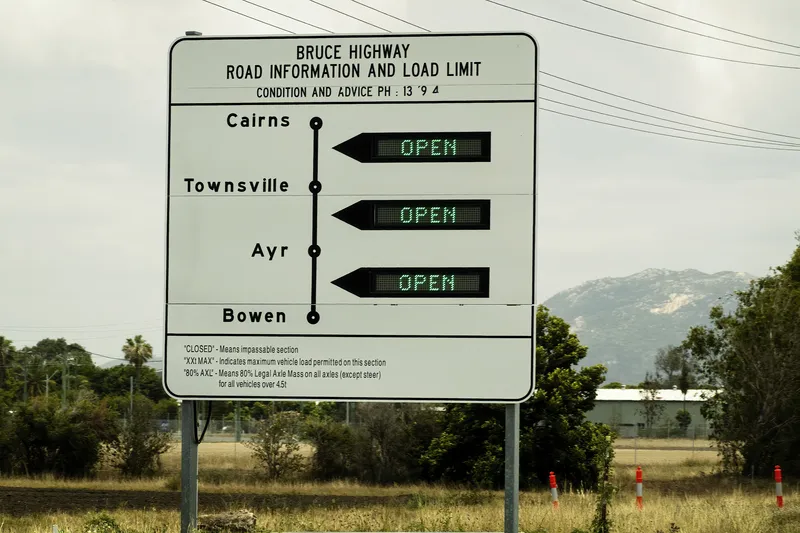
Bruce Highway: one of Queensland's main arteries (© Michele Jackson | Dreamstime.com)

The government of Queensland, Australia, expects a cooperative ITS (C-ITS) upgrade of one of its major roads to reduce crashes by 20%.

The work on Bruce Highway, jointly funded by the Australian and Queensland governments, expands on an Ipswich pilot between September 2021 and 2022. 

The systems consist of 29 signalised intersections using roadside intelligent transport systems stations and a central facility to test six safety use cases.

"This project gives regional road users the chance to explore the C-ITS service along the highway before it becomes commercially available in vehicles, which we are expecting on Australian roads in 2024-25," said Mark Bailey, minister for transport and main roads of Queensland.

"My department is focused on unlocking the crash reduction benefits of C-ITS. This system is expected to reduce crashes by 20%, contributing towards the Queensland Government's vision of zero road deaths and serious injuries, and save around $2 billion over the next 30 years.”

Since the Ipswich pilot's conclusion, Kapsch TrafficCom has supplied and remotely commissioned an additional 37 of its roadside units (RSUs) along the Bruce Highway, covering over 1,500km along the north-east coast of Australia between Brisbane and Cairns.

Kapsch's RSUs are at traffic lights where the Bruce Highway passes through townships. The RSUs broadcast signal status and timing to connected road users, providing them with warnings of red lights and pedestrians at crossings.

"As traffic volumes increase, connected vehicle technology will play a major role in improving safety and efficiency of the transport network," says Matthew McLeish, EVP for the APAC region at Kapsch TrafficCom.

“The project implementation and pilot execution have created a blueprint for C-ITS projects in Australia and internationally."

For more information on companies in this article

Related Content

  • Intelematics: five takeaways from ITS World Congress in Singapore
    October 31, 2019
    If you weren’t fortunate enough to be at the 26th ITS World Congress in Singapore – fear not! Stephen Owens of Intelematics takes you through his highlights of the show… Having recently topped the world’s first Smart City Index, Singapore was the ideal host city for this year’s ITS World Congress and provided a fantastic opportunity to bring the International ITS community to the Asia-Pacific (APAC) region. Themed ‘smart mobility, empowering cities,’ it was an enjoyable week full of networking and lea
  • Almost ten per cent growth predicted for road safety market by 2021
    November 3, 2016
    According to a new market research report "Road Safety Market by Solution (Red Light Enforcement, Speed Enforcement, Incident Detection System, Bus Lane Compliance, and Automatic License Plate Recognition), Service (Consulting & System Integration and Risk Assessment) - Global Forecast to 2021", published by MarketsandMarkets, the road safety market is estimated to grow from US$2.60 billion in 2016 to US$4.06 billion by 2021, at a compound annual growth rate (CAGR) of 9.3% during the forecast period. The
  • Sydney to trial connected technology to reduce congestion
    May 3, 2016
    Sydney, Australia is to trial connected technology in a bid to tackle congestion by reducing the number of times trucks stop at traffic signals. Minister for Roads Duncan Gay says the technology should improve travel time at more than 100 intersections across Sydney, resulting in smoother overall traffic flow for all road users.
  • With C-ITS we can get ourselves connected
    June 27, 2025
    Workzones need to be safer for drivers and workers – and the technology exists to harmonise safety with mobility needs, says Swarco’s Daniel Lenczowski