
Pandemic ‘proves value’ of emerging world’s informal public transport

Networks of minibuses fill gaps left by reduced 'formal' services
By Adam Hill June 9, 2020 Read time: 2 mins
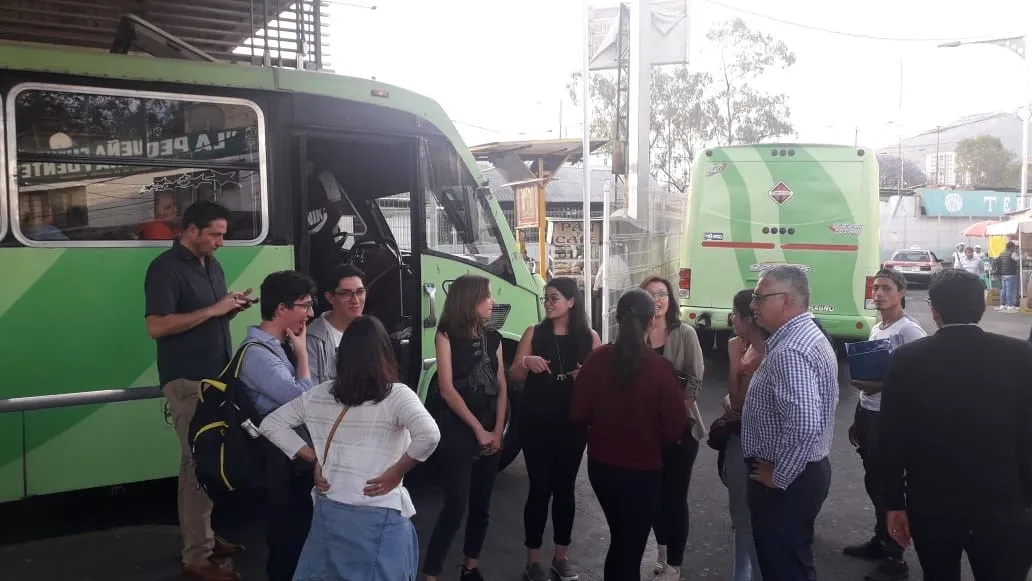
Informal public transport provides an essential service in some countries (picture credit: WIMT)

As public transport shut down or are reduced in the world's emerging markets due to coronavirus, 'informal' public transport networks have demonstrated their flexibility, says one mobility expert.

Devin de Vries, CEO of WhereIsMyTransport, a company which maps mobility data for the emerging world’s largest low- and middle-income cities, says that each week five billion commuters use these services to get around.

"Vehicles go by different names – minibus taxis in South Africa, matatus in Kenya, peseros in Mexico – but typically take the form of 16-passenger vans running along semi-flexible routes," he explains.

Subsidised public transport was cut back in South Africa as part of the Covid-19 lockdown, for example.

"Governments only have these options because informal public transport networks are so flexible and resilient," he says.

"Developed-world cities can shut down metro stations and cut back bus service in part because they can count on private vehicles, taxis or ride hailing services to fill the gap for essential workers."
 
For emerging market megacities, he suggests that informal transport plays a similar role: "With comprehensive networks and no route cuts, informal transport keeps essential services running."

De Vries says that minibus passengers in Mexico City during the pandemic have even reported shorter travel times - despite there being fewer vehicles per route.

Governments could help improve matters post-coronavirus by prioritising informal public transport "to make it work better", he believes. 

Read the full article in the July/August edition of ITS International
 

For more information on companies in this article

Related Content

  • Authorities look to MaaS for new solutions and cost savings
    July 18, 2017
    The structure of society and the way in which our cities work will be completely transformed by Mobility as a Service (MaaS), Finland’s minister of transport and communications Anne Berner, told ITS International’s recent MaaS Market conference 2017 in London. In her keynote address, Berner told a packed audience of more than 200 ITS professionals that MaaS has the potential to help governments around the world meet their big city targets such as the rate of employment, the environment, the efficient use of
  • Nairobi looks to ITS to ease travel problems
    March 6, 2018
    Shem Oirere looks at plans to tackle chronic congestion in the Kenyan capital - where commuters can typically expect it to take up to two hours to complete a 15km journey. Traffic jams in the Kenyan capital, Nairobi, are estimated to cost the country $360 million a year in terms of lost man-hours, fuel and pollution. According to Wilfred Oginga, an engineer with the Kenya Urban Roads Authority (KURA), the congestion has been exacerbated by poor regulation and enforcement of traffic rules, absence of
  • Nairobi looks to ITS to ease travel problems
    March 6, 2018
    Shem Oirere looks at plans to tackle chronic congestion in the Kenyan capital - where commuters can typically expect it to take up to two hours to complete a 15km journey. Traffic jams in the Kenyan capital, Nairobi, are estimated to cost the country $360 million a year in terms of lost man-hours, fuel and pollution. According to Wilfred Oginga, an engineer with the Kenya Urban Roads Authority (KURA), the congestion has been exacerbated by poor regulation and enforcement of traffic rules, absence of
  • Nairobi looks to ITS to ease travel problems
    March 6, 2018
    Shem Oirere looks at plans to tackle chronic congestion in the Kenyan capital - where commuters can typically expect it to take up to two hours to complete a 15km journey. Traffic jams in the Kenyan capital, Nairobi, are estimated to cost the country $360 million a year in terms of lost man-hours, fuel and pollution. According to Wilfred Oginga, an engineer with the Kenya Urban Roads Authority (KURA), the congestion has been exacerbated by poor regulation and enforcement of traffic rules, absence of




