
Bird app - now with extra bikes

Micromobility group is including local bike-share providers in its app in US and Norway
By Adam Hill September 27, 2021 Read time: 2 mins
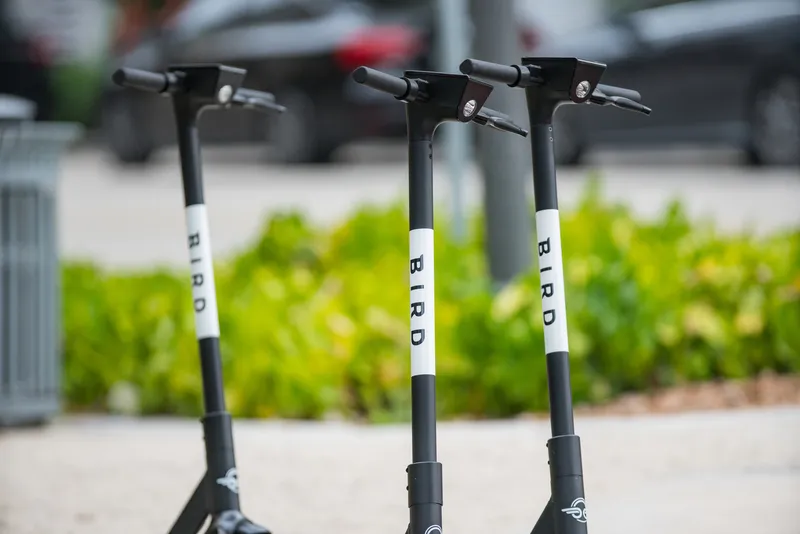
Bird: 'We must think creatively in ways that support existing transit modes and fill in a city’s mobility gaps' (© Felix Mizioznikov | Dreamstime.com)

Bird has connected its shared scooter platform to local bike-share providers in four US cities and one in Norway.

The move, part of the micromobility firm's Smart Bikeshare Program which was announced in June, means that bike-share services now appear in the Bird app in Austin (Metrobike Austin), Los Angeles (Metro Bike), San Antonio (SA Bikeshare), Milwaukee (Bublr Bikes Milwaukee) and Oslo (Oslo City Bike).

Bird app users will be able to see their nearest public bike stations and bikes available; tapping the relevant icon will take the rider to the local bike-share app.

Bird insists this is "completely cost free to cities and local operators" and will "help encourage multimodal mobility and reduce dependence on ICE vehicles".

The company began partnering with Italian e-moped operator ZigZag on a similar integration in Florence earlier this year, but the five cities are the first places where it is to be introduced at scale.

“This is a forward-thinking programme that underlines the benefits of GBFS data and demonstrates how different micromobility options such as shared scooters and bikes can work together towards the same positive goal,” said Sam Herr, executive director at the North American Bikeshare and Scootershare Association.

“This is an exciting initiative as we all look to increase the usage and access to clean transportation alternatives.”

Zig Zag founder Emanuele Grazioli says the partnership "is helping establish a new industry standard, one that benefits riders, cities and local businesses alike".

Bird suggests that integrating public bikes and shared scooters is "particularly important as many big-city commuters wrestle with returning to the office".

“Cities and riders are best served by transportation services that complement one another,” said Renaud Fages, Bird’s global head of operations.

“To serve all riders, we must think creatively in ways that support existing transit modes and fill in a city’s mobility gaps."

For more information on companies in this article

Related Content

  • The AI revolution in transportation
    November 21, 2024
    Navigating the future of mobility means approaching AI as a powerful tool that, when wielded responsibly, can help us build transportation systems that truly serve people, says Alex Nesic
  • Ertico weaves tunnel visions into the ‘big picture’
    April 7, 2017
    As he takes the wheel at Ertico - ITS Europe, Jacob Bangsgaard talks to ITS International about the challenges and opportunities facing the organisation and the ITS industry. Ertico - ITS Europe’s new CEO, Jacob Bangsgaard, is no stranger to the organisation having spent five years there before moving to the FIA (Federation Internationale de l’Automobile) in 2006. Four years later he became director general of the FIA’s Region I (EMEA), which represents more than 100 mobility clubs, and in 2012 he joined Er
  • Ertico weaves tunnel visions into the ‘big picture’
    April 7, 2017
    As he takes the wheel at Ertico - ITS Europe, Jacob Bangsgaard talks to ITS International about the challenges and opportunities facing the organisation and the ITS industry. Ertico - ITS Europe’s new CEO, Jacob Bangsgaard, is no stranger to the organisation having spent five years there before moving to the FIA (Federation Internationale de l’Automobile) in 2006. Four years later he became director general of the FIA’s Region I (EMEA), which represents more than 100 mobility clubs, and in 2012 he joined Er
  • Kerb your enthusiasm, warns Passport
    March 4, 2019
    Dynamic kerbside management is crucial if urban authorities are to address increasingly chaotic situations caused by the gig economy and mobility innovation, says Adam Warnes at Passport Demand for the kerbside is growing and changing and it’s no surprise when you consider the recent innovations within the mobility industry. For starters, there are new modes of transport, including ride-shares, electric vehicles (EVs), dockless cycles, last-mile consolidations and autonomous vehicles (AVs). Secondly, the




