
Rolls-Royce and VTT partner to develop smart ships

Rolls-Royce and VTT Technical Research Centre of Finland have announced a strategic partnership to design, test and validate the first generation of remote and autonomous ships. The new partnership will combine and integrate the two company’s unique expertise to make such vessels a commercial reality. Rolls-Royce is pioneering the development of remote controlled and autonomous ships and believes a remote controlled ship will be in commercial use by the end of the decade. The company is applying technol
November 15, 2016 Read time: 2 mins
4348 Rolls-Royce and 814 VTT Technical Research Centre of Finland have announced a strategic partnership to design, test and validate the first generation of remote and autonomous ships. The new partnership will combine and integrate the two company’s unique expertise to make such vessels a commercial reality.

Rolls-Royce is pioneering the development of remote controlled and autonomous ships and believes a remote controlled ship will be in commercial use by the end of the decade. The company is applying technology, skills and experience from across its businesses to this development.

VTT has deep knowledge of ship simulation and extensive expertise in the development and management of safety-critical and complex systems in demanding environments such as nuclear safety. They combine physical tests such as model and tank testing, with digital technologies, such as data analytics and computer visualisation. They will also use field research to incorporate human factors into safe ship design. As a result of working with the Finnish telecommunications sector, VTT has extensive experience of working with 5G mobile phone technology and wi-fi mesh networks. VTT has the first 5G test network in Finland.  

Working with VTT will allow Rolls-Royce to assess the performance of remote and autonomous designs through the use of both traditional model tank tests and digital simulation, allowing the company to develop functional, safe and reliable prototypes.

For more information on companies in this article

Related Content

  • On a WIM – a global view of weigh in motion
    May 25, 2016
    Q-Free’s Andrew Lees looks at regional characteristics and technology trends in the global Weigh-In-Motion market. The principles of Weigh-In-Motion (WIM) are well established. Data derived from vehicles passing over in-ground sensors can be interpreted for vehicle classification (axle counts and spacing) and positive identification (especially when linked to image capture) applications as well as to derive individual axle and gross vehicle weight (GVW).
  • Transport for London launches competition to create accessibility apps
    March 14, 2013
    Transport for London (TfL) is launching a competition to create new 'Accessibility Apps', marking the first of a series of initiatives to improve the variety of accessibility apps on offer. As part of the competition developers are being invited to apply with ideas for a new travel app which will make Transport for London (TfL) real time data more accessible to a far wider audience than mainstream Apple/Android apps. The winning entries will receive development support from TfL. Making the transport network
  • Inrix expands Signal Analytics capabilities 
    February 19, 2021
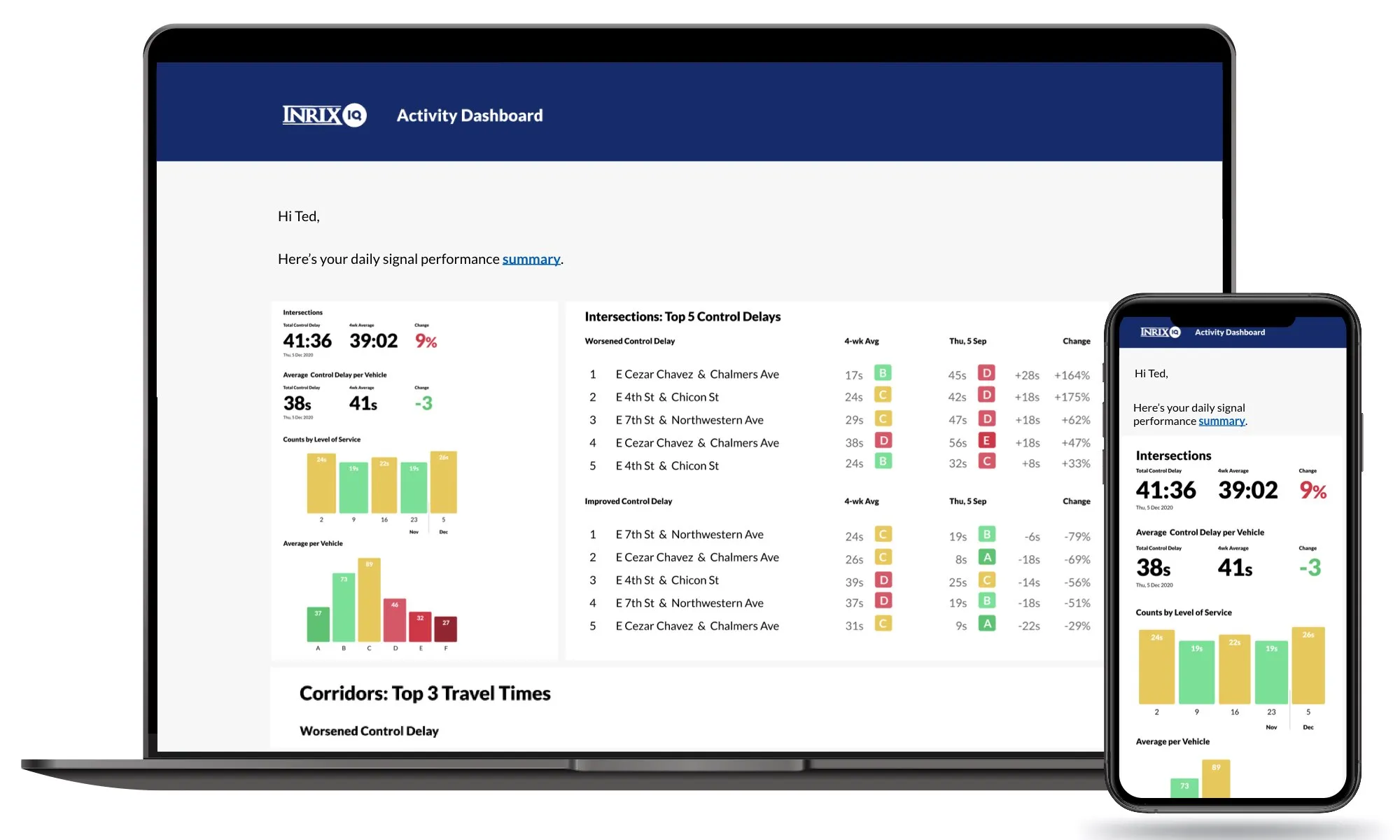
    Operators can now understand performance of 210,000 signalised intersections, firm says 
  • Pitney Bowes partners with Inrix
    April 29, 2014
    Pitney Bowes has entered into a multi-year partnership with traffic information provider Inrix to deliver advanced location intelligence solutions through the company’s traffic intelligence platform. By integrating location capabilities with traffic analysis and delivering this information through Inrix’s mobile app, Inrix and Pitney Bowes will enhance the driving experience of today’s connected drivers, enabling them to make location-based decisions in real-time.




