Rolls-Royce and VTT partner to develop smart ships

Rolls-Royce and VTT Technical Research Centre of Finland have announced a strategic partnership to design, test and validate the first generation of remote and autonomous ships. The new partnership will combine and integrate the two company’s unique expertise to make such vessels a commercial reality. Rolls-Royce is pioneering the development of remote controlled and autonomous ships and believes a remote controlled ship will be in commercial use by the end of the decade. The company is applying technol
November 15, 2016 Read time: 2 mins
4348 Rolls-Royce and 814 VTT Technical Research Centre of Finland have announced a strategic partnership to design, test and validate the first generation of remote and autonomous ships. The new partnership will combine and integrate the two company’s unique expertise to make such vessels a commercial reality.

Rolls-Royce is pioneering the development of remote controlled and autonomous ships and believes a remote controlled ship will be in commercial use by the end of the decade. The company is applying technology, skills and experience from across its businesses to this development.

VTT has deep knowledge of ship simulation and extensive expertise in the development and management of safety-critical and complex systems in demanding environments such as nuclear safety. They combine physical tests such as model and tank testing, with digital technologies, such as data analytics and computer visualisation. They will also use field research to incorporate human factors into safe ship design. As a result of working with the Finnish telecommunications sector, VTT has extensive experience of working with 5G mobile phone technology and wi-fi mesh networks. VTT has the first 5G test network in Finland.  

Working with VTT will allow Rolls-Royce to assess the performance of remote and autonomous designs through the use of both traditional model tank tests and digital simulation, allowing the company to develop functional, safe and reliable prototypes.

For more information on companies in this article

Related Content

  • Inrix informs FHWA’s data improvements
    December 19, 2017
    Refinements in the data available from the US Federal Highway Administration will improve road management across America. David Crawford reports. In August 2017, the US Federal Highway Administration (FHWA) issued the first results from an upgraded version of its National Performance Management Research Data Set (NPMRDS). Developed to identify the locations and times of high congestion affecting traffic flows along America’s 259,000km (161,000 mile) national highway system, this is a key resource for sta
  • Safe-driver training reduces costs, increases safety
    February 3, 2012
    Hermes, one of Europe's leading home delivery specialists, and part of the Otto group's European logistics division, estimates that introducing a range of safe-driving measures in its UK operations have contributed to a US$1.5 million cost saving to the business in the 12 months to April 2010.
  • Hats off for Cohda's MK6 Proximity Detection
    September 18, 2024
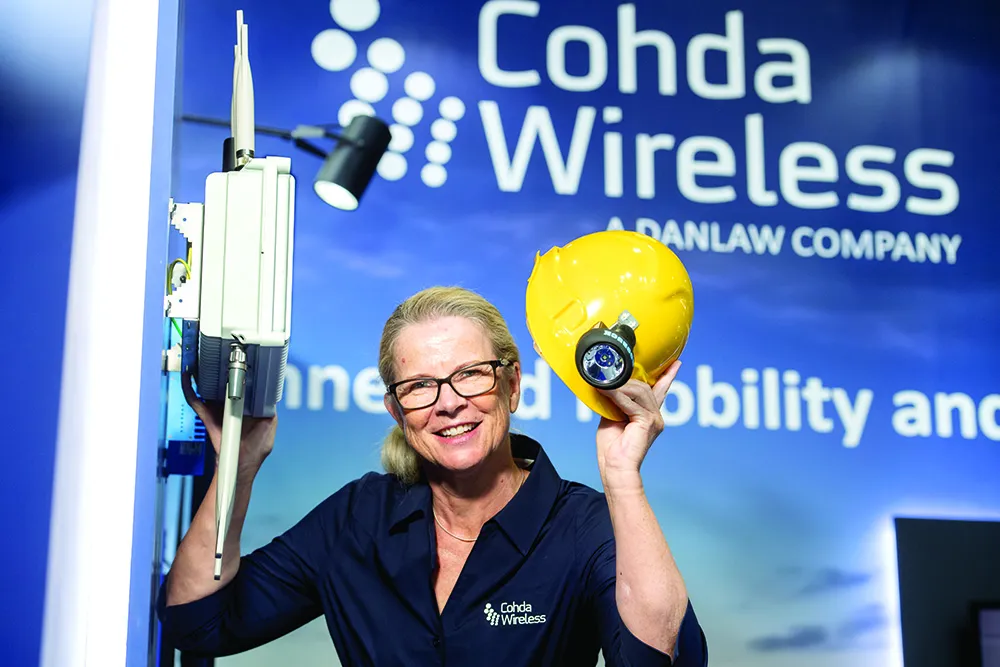
    Cohda Wireless is displaying what it claims is arguably the most advanced and mission-ready connected vehicle technology solution available, the MK6 proximity detection.
  • The future of in-vehicle navigation systems
    February 3, 2012
    TRL's Alan Stevens looks at the evolution and future prospects of in-vehicle navigation devices. Human-Machine Interaction (HMI) plays a crucial role in the safety of vehicles on our roads. Until we achieve full automation (and that's a debatable prospect anyway) a driver's interaction with the vehicle - all the controls, information and systems - holds a pivotal role in safe driving.