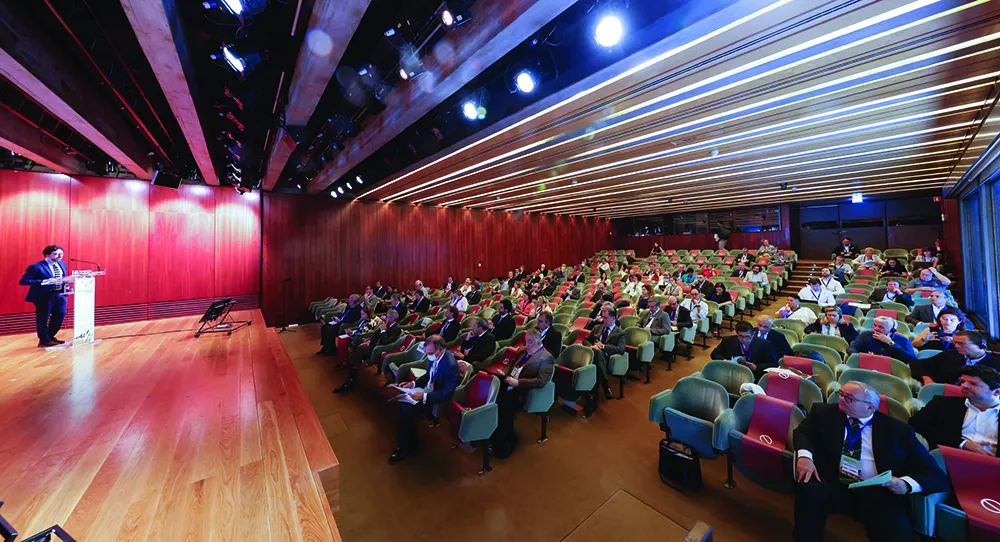
Dutch rapid transit specialist 2getthere has just hosted its ‘insights in driverless transit’ seminar to provide information on key aspects related to the introduction of automated vehicles.
The meeting drew visitors from Italy, South-Africa, Sweden, Norway, Singapore, USA and the Netherlands. Presentations were made by the Metropolitan Region Rotterdam The Hague, Ricardo Rail, SMRT and 2getthere, while city of Capelle aan den IJssel and Connexxion shared their experiences with the operations of the 2get

Dutch rapid transit specialist 8172 2getthere has just hosted its ‘insights in driverless transit’ seminar to provide information on key aspects related to the introduction of automated vehicles.
The meeting drew visitors from Italy, South-Africa, Sweden, Norway, Singapore, USA and the Netherlands. Presentations were made by the Metropolitan Region Rotterdam The Hague, Ricardo Rail, SMRT and 2getthere, while city of Capelle aan den IJssel and Connexxion shared their experiences with the operations of the 2getthere ParkShuttle system over the last 10 years.
In the afternoon the company’s ParkShuttle automated vehicle system served as the reference visit preceding the Podcar conference, which takes place on 20 and 21 September in Antwerp, Belgium. The conference will look at the most recent developments in automated public transit and how close they are to reality.
The meeting drew visitors from Italy, South-Africa, Sweden, Norway, Singapore, USA and the Netherlands. Presentations were made by the Metropolitan Region Rotterdam The Hague, Ricardo Rail, SMRT and 2getthere, while city of Capelle aan den IJssel and Connexxion shared their experiences with the operations of the 2getthere ParkShuttle system over the last 10 years.
In the afternoon the company’s ParkShuttle automated vehicle system served as the reference visit preceding the Podcar conference, which takes place on 20 and 21 September in Antwerp, Belgium. The conference will look at the most recent developments in automated public transit and how close they are to reality.