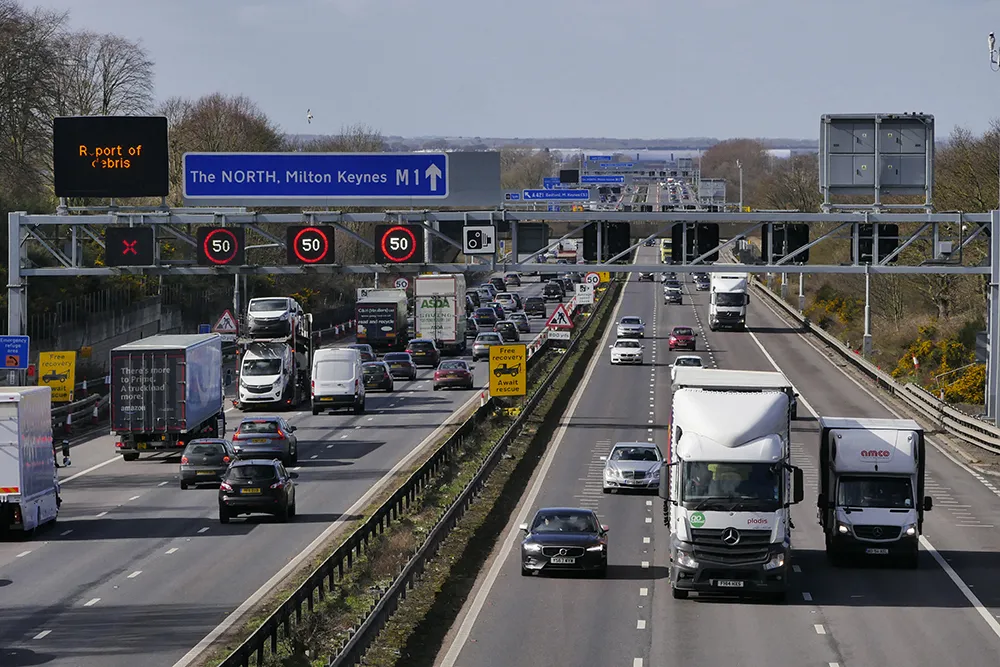
The Massachusetts Department of Transportation (MassDOT) is to move ahead with plans to completely demolish Interstate 90 toll plazas by the end of 2017 as a milestone in the state’s progress toward all electronic tolling (AET) along Interstate 90 (the Massachusetts Turnpike), the Tobin Bridge, and Boston tunnels.
MassDOT has announced that AET will go live on 28 October and says the system will improve driver convenience and safety and reduce greenhouse gas-causing vehicle emissions. “When toll booths

The 7213 Massachusetts Department of Transportation (MassDOT) is to move ahead with plans to completely demolish Interstate 90 toll plazas by the end of 2017 as a milestone in the state’s progress toward all electronic tolling (AET) along Interstate 90 (the Massachusetts Turnpike), the Tobin Bridge, and Boston tunnels.
MassDOT has announced that AET will go live on 28 October and says the system will improve driver convenience and safety and reduce greenhouse gas-causing vehicle emissions. “When toll booths have been removed, AET will allow drivers to maintain regular highway speed as they pass under AET gantries, eliminating the need for drivers to sharply reduce speed and idle in toll booth lines.
MassDOT is working with the Executive Office of Public Safety to establish clear policies for the use and retention of AET data and is in discussions with public safety officials about the very limited circumstances in which AET-generated ‘hot list’ or other information could be used in the case of public safety emergencies.
MassDOT officials estimate that the agency will save about US$5 million in annual operating costs with AET. The cost of designing and building the physical AET system is about US$130 million and toll plaza removal and reconstruction, excluding the Sumner Tunnel, will cost about US$133 million.
MassDOT has announced that AET will go live on 28 October and says the system will improve driver convenience and safety and reduce greenhouse gas-causing vehicle emissions. “When toll booths have been removed, AET will allow drivers to maintain regular highway speed as they pass under AET gantries, eliminating the need for drivers to sharply reduce speed and idle in toll booth lines.
MassDOT is working with the Executive Office of Public Safety to establish clear policies for the use and retention of AET data and is in discussions with public safety officials about the very limited circumstances in which AET-generated ‘hot list’ or other information could be used in the case of public safety emergencies.
MassDOT officials estimate that the agency will save about US$5 million in annual operating costs with AET. The cost of designing and building the physical AET system is about US$130 million and toll plaza removal and reconstruction, excluding the Sumner Tunnel, will cost about US$133 million.