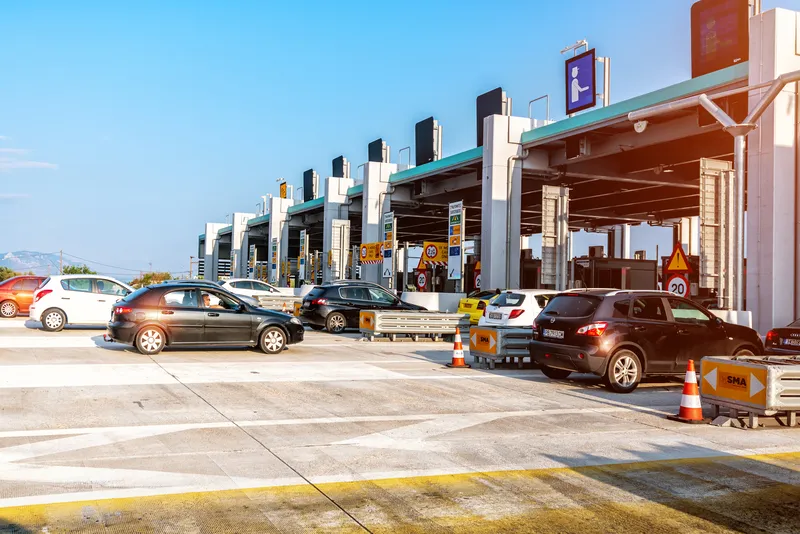
Kapsch TrafficCom has launched an electronic toll system in Greece which it says only charges drivers for the actual kilometres driven on a motorway.
The Hybrid Multi-Lane Toll System supplements the existing payment system on the A8 Athens-Patras motorway that charges drivers for an entire section of road, even if they exit after the first toll barrier.
“The European Union sees traditional section payment as an unfair phase-out model and is pushing to charge only for actual kilometres driven," says Michael Weber, strategic sales manager at Kapsch TrafficCom.
"This method will be mandatory for new toll routes and a recommended feature for existing toll routes. This means that the changeover on the A8 motorway from Athens to Patras in December 2020 is not only groundbreaking for Greece, but is likely to set a precedent throughout the EU."
To use the new service, cars will be equipped with on-board units attached to the interior windshield.
When the car enters a toll checkpoint, the system will automatically debit the toll costs from the owner's customer account and the barrier will open to allow the vehicle onto the highway.
As the vehicle exits the route, any overpaid costs for the entire section will be credited back to the driver's account in a mileage-based billing transaction.
Civic leaders of cities and towns along the Athens-Patras motorway have lobbied for the introduction of the Hybrid Multi-Lane Toll System, the company adds.
According to Kapsch, this is because motorists wanting to avoid the cost of an entire stretch of motorway 8 stayed on roads going through towns, which resulted in a considerable noise and emissions.
Weber predicts that other toll routes in Greece, Spain and Italy are likely to follow the example of the new system.
“The billing technology not only ensures that costs are charged fairly in line with EU recommendations, but can also be expanded to include additional services,” Weber continues.
“For example, it is possible to set the toll for vehicles according to different environmental standards: e-vehicles would pay less than gasoline or diesel, for example."