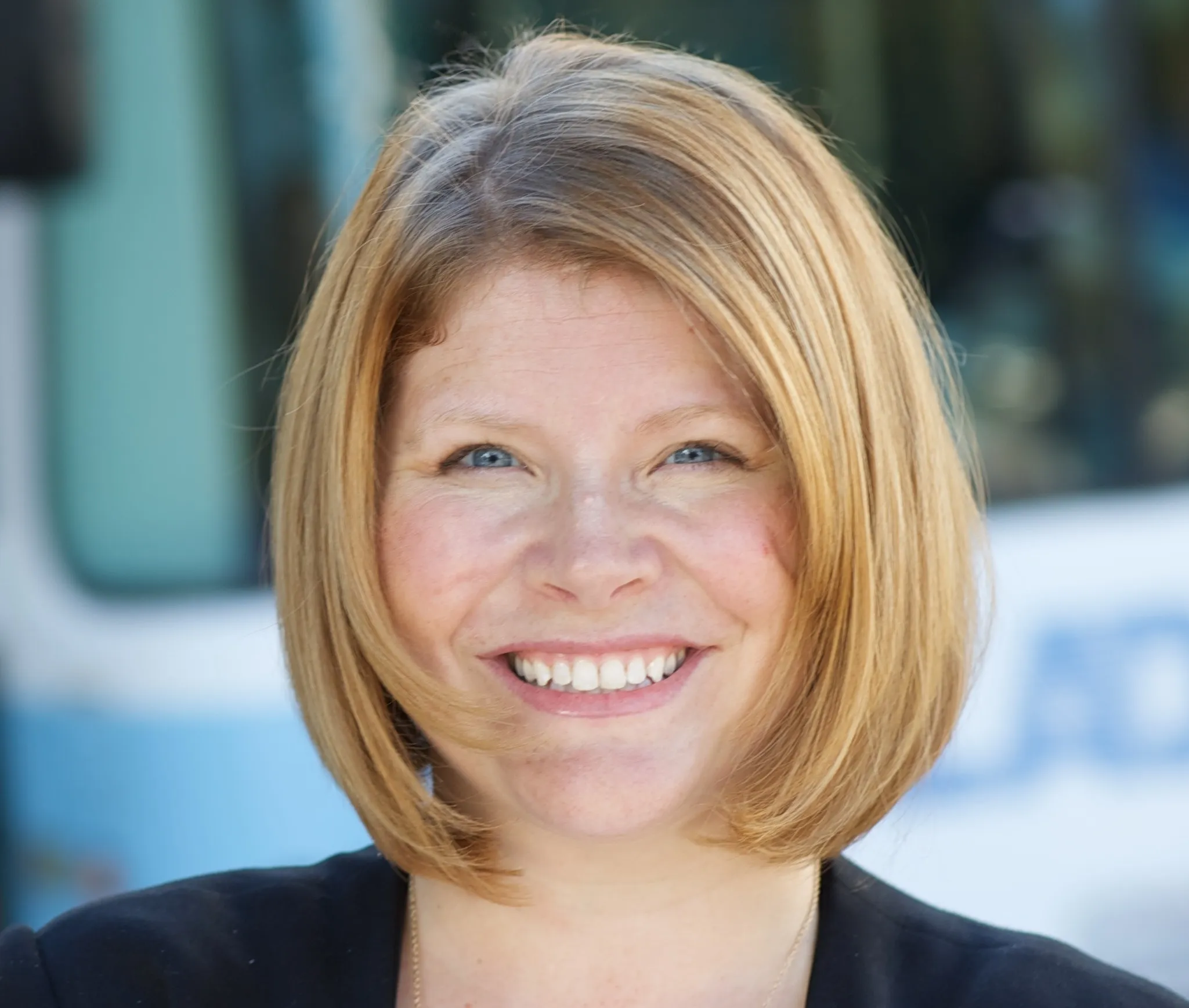
Seleta Reynolds, who has taken up a new role as chief innovation officer at LA Metro, has warned that there is an imbalance in the mobility system of Los Angeles, with car drivers heavily subsidised - and suggests congestion pricing may help 'level the playing field'.
In a wide-ranging interview with ITS International editor Adam Hill ahead of September’s 2022 ITS World Congress in Los Angeles, Reynolds said: “When you look at the way that we've allocated funding for public transit, and allocated road space between cars and people who aren't travelling by car, it's not equitable.”
Reynolds, who was general manager of Los Angeles Department of Transportation before recently taking the LA Metro role, said: "We need to think about how do we make the consequences of people's transportation choices more transparent to them? How do we begin to level the playing field between driving - which is a heavily subsidised activity - and taking transit, which we haven't invested in and subsidised in the same way. Congestion pricing offers an opportunity to do that, but we have to do it in a way that is incredibly mindful of inherent inequities that people struggle with currently and that doesn't exacerbate those."
Examples of car driver subsidies include the ubiquity of free parking. "There are places where you have to pay to park but we devote a tremendous amount of public space - I mean the streets themselves, which usually comprise about 18% of the public space in a city and Los Angeles is no different - we devote a tremendous amount of that public space to the free storage of private vehicles, instead of devoting it to things like bike lanes or transit-only lanes," Reynolds points out.
There is also the use of the infrastructure itself. “It’s not really a secret that for the interstate system, the road system, that we have, we do not have an adequate budget to keep it in a state of good repair indefinitely," she continues. "And while there are places that people pay fees to support the maintenance of that system, we don't pay nearly enough - we don't pay what it costs to keep it in a state of good repair. So those things are borne in other ways."
Low fuel prices are another issue. “Even though right now we're in a moment where the price of gas feels high to people, in general the way that we keep gas prices low kind of disguises all of the negative impacts that driving has on our on our society - in terms of air quality, in terms of traffic crashes. It doesn't cost a lot, generally speaking, to fill up your car and go for a drive. And so people don't really pay the full cost of the infrastructure they're using.”
Read the interview in ITS International Sept/Oct issue, out soon.